
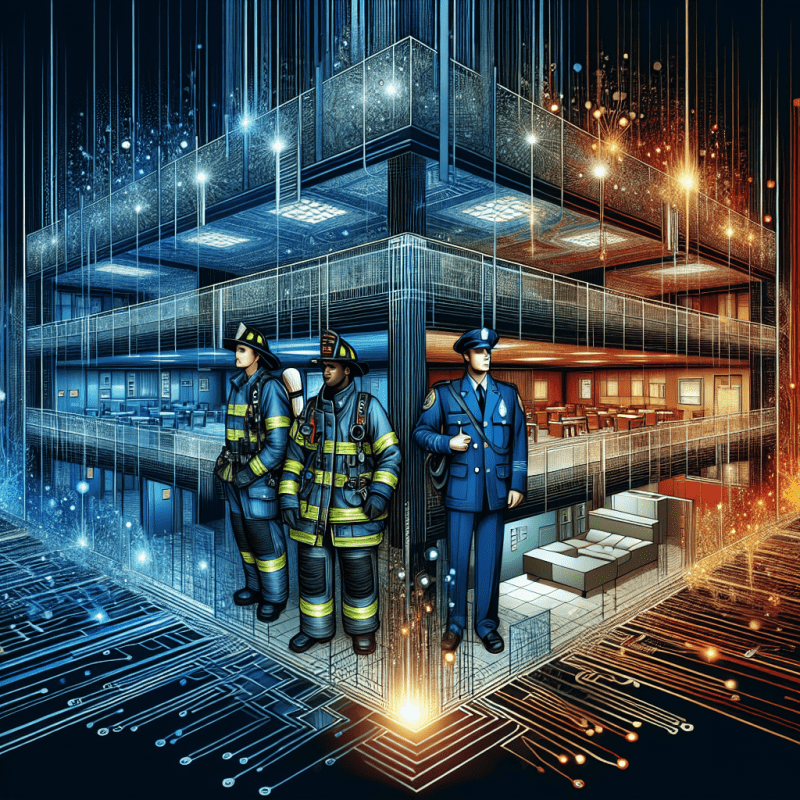
- Understanding Emergency Responder Radio Communication Systems (ERCES)
- Navigating Critical Regulatory Compliance for ERCES
- Professional ERCES System Design: The Foundation of Performance
- Expert ERRCS Installation and Deployment
- Thorough ERCES Testing and System Commissioning
- Proactive ERRCS Maintenance and Ongoing Monitoring
- Choosing the Right Partner for Your Public Safety DAS Needs
- Frequently Asked Questions (FAQ) About Robust ERCES
In emergency situations, every second counts. Clear and reliable communication is the backbone of effective first responder operations, especially within modern buildings. However, the very structures designed to protect us – with their steel, concrete, and low-emissivity glass – can become silent zones for critical radio signals. This is where an Emergency Responder Radio Communication System, often called ERCES or ERRCS, becomes not just a convenience, but a life-saving necessity.
A robust ERCES ensures that firefighters, police officers, and paramedics can communicate seamlessly inside any structure, from basements and stairwells to high-rise floors and complex campuses. Without these essential in-building wireless systems, emergency personnel face dangerous communication blackouts, jeopardizing their safety and the lives of those they are trying to save. This comprehensive guide will explore the key elements that define a truly robust Emergency Responder Radio Communication System, detailing how each component and process contributes to a reliable, code-compliant, and ultimately life-saving public safety DAS solution. We will cover everything from understanding the technology and navigating complex regulations to the importance of expert design, installation, testing, and ongoing maintenance, all geared towards generating leads for Lexico’s critical BDA/ERRCS services.
Understanding Emergency Responder Radio Communication Systems (ERCES)
An Emergency Responder Radio Communication System (ERCES), also known as ERRCS, is a specialized in-building wireless system designed to ensure first responder communication is strong and clear throughout a structure. This includes areas typically prone to weak signal areas like basements, elevator shafts, stairwells, and the core of large buildings. These systems are mandated by various building codes to provide consistent radio signal coverage for two-way radio frequencies used by public safety agencies.
The primary goal of an ERCES is to amplify existing public safety radio signals from outside the building and distribute them effectively indoors, and vice versa. This ensures that emergency personnel can maintain constant contact with their command centers and with each other, regardless of their location within the structure. Without a properly functioning emergency radio system, even a minor incident can escalate into a major disaster due to communication failures. The ability for firefighters to call for backup or for paramedics to relay vital patient information can be the difference between life and death.
Key components of an ERCES include a Bi-Directional Amplifier (BDA), a Distributed Antenna System (DAS), and a master antenna. The BDA is the heart of the system, acting as a powerful signal booster. It captures weak signals from outside, amplifies them, and sends them into the DAS network inside the building. Conversely, it takes signals from within the building, amplifies them, and sends them back out to the public safety radio network. The DAS consists of a network of cables, splitters, and strategically placed indoor antennas that distribute these amplified signals, ensuring uniform radio signal coverage across all critical areas of the building. This intricate setup requires specialized RF engineering to optimize signal distribution and prevent interference, guaranteeing consistent system reliability for all critical communications.
Navigating Critical Regulatory Compliance for ERCES
One of the most crucial elements of a robust ERCES is strict adherence to regulatory standards and building codes. Ignorance of these regulations can lead to significant penalties, project delays, and, most importantly, a system that fails when lives are on the line. Key regulations include NFPA 1225, IFC Section 510, and FCC regulations, each playing a vital role in dictating the requirements for emergency radio system installations.
NFPA 1225, the ‘Standard for Emergency Services Communications’, is the most recent and comprehensive standard. It provides detailed guidelines for the installation, performance, testing, and maintenance of ERCES. This standard emphasizes a holistic approach to life safety systems, covering aspects like design, documentation, and even the qualifications of installers. Building owners and developers must understand that meeting NFPA 1225 requirements is not optional; it is a critical step in ensuring their building is safe and compliant. This standard integrates many aspects that were previously scattered across different documents, providing a unified framework for code compliance.
IFC Section 510, part of the International Fire Code, has historically been the cornerstone for public safety DAS requirements. It mandates that newly constructed or significantly renovated buildings must provide adequate radio signal coverage for first responder communication. This includes specific signal strength requirements for various areas within a building, ensuring that even in the most challenging environments like underground parking garages or core areas of high-rise buildings, emergency personnel can communicate effectively. Compliance with IFC Section 510 is often a prerequisite for obtaining occupancy permits and demonstrating a commitment to building occupants safety.
Beyond fire and building codes, FCC regulations govern the use of signal boosters, including BDAs, to prevent interference with licensed frequency bands. An ERCES must be designed and operated in accordance with FCC rules, which often require specific licensing or coordination with public safety agencies. This ensures that the installed BDA amplifies signals without causing harmful interference to other critical communications. Navigating these federal regulations requires specialized technical expertise to ensure that the entire ERRCS operates legally and efficiently, safeguarding both the integrity of the communication network and the safety of those relying on it. Working with professionals who understand these intricate rules is essential for a compliant emergency radio system.
Professional ERCES System Design: The Foundation of Performance
Installing an Emergency Responder Radio Communication System (ERCES) is not a ‘one-size-fits-all’ endeavor. The unique characteristics of each building demand a meticulously planned and professionally executed ERCES system design. This crucial phase lays the groundwork for the system’s effectiveness and compliance, addressing potential challenges before they become costly problems during ERRCS installation.
The process begins with comprehensive initial site surveys. These surveys are paramount for identifying existing radio signal coverage, mapping out weak signal areas, and assessing the building’s structural composition. Factors such as wall materials, floor plans, and potential interference sources (like elevator motors or large metal structures) all impact RF propagation and must be thoroughly evaluated. For instance, a concrete basement will have vastly different signal amplification needs compared to a steel-framed high-rise. This detailed assessment allows RF engineering specialists to understand the unique challenges and opportunities within each specific building environment.
A key tool in modern ERCES design is iBwave design software. This sophisticated platform allows engineers to create a precise digital twin of the building, simulating radio signal coverage and performance with remarkable accuracy. Using iBwave, designers can virtually place antennas, calculate optimal cable lengths, and predict signal strength in every room, stairwell, and elevator shaft. This predictive modeling ensures that the proposed public safety DAS will meet all NFPA 1225 and IFC Section 510 requirements for signal strength and coverage from the outset, significantly reducing the need for costly rework after ERRCS installation. It’s a testament to the power of precision planning, transforming theoretical requirements into practical, verifiable designs.
Ultimately, a professional ERCES system design leads to a customized solution tailored to the specific needs of the building and the local Authority Having Jurisdiction (AHJ). It involves selecting the appropriate BDA and DAS components from reputable manufacturers, calculating precise power outputs, and strategizing antenna placement for maximum efficiency and uniform radio signal coverage. This level of detail and customization, driven by expert RF engineering and advanced tools like iBwave, ensures that the final emergency radio system is not just functional but truly robust, providing reliable first responder communication when it matters most.
Expert ERRCS Installation and Deployment
Even the most meticulously designed Emergency Responder Radio Communication System (ERRCS) will fail without expert ERRCS installation. This phase is where the carefully crafted plans translate into a physical, functioning in-building wireless system. The complexity of these systems, coupled with their critical role in life safety systems, demands highly skilled and certified technicians who prioritize precision, safety, and adherence to design specifications.
Expert ERRCS installation involves the strategic placement of all system components, including the Bi-Directional Amplifier (BDA), the distributed antenna system (DAS) network, cabling, and power supplies. This is not simply about mounting equipment; it requires a deep understanding of RF engineering principles to ensure proper signal flow, minimize interference, and achieve optimal signal amplification across all frequency bands. Technicians must meticulously install antennas in locations that maximize radio signal coverage while remaining aesthetically discreet and compliant with fire safety standards. For instance, careful routing of fire-rated cables and precise connector termination are crucial for maintaining signal integrity and system resilience in an emergency.
Safety is a paramount concern during ERRCS installation. Technicians must adhere to strict safety protocols, especially when working in occupied buildings, at heights, or within active construction zones. This includes proper use of personal protective equipment, secure rigging, and careful management of work areas to prevent disruption and ensure the safety of building occupants. Furthermore, the installation process must be executed with minimal disruption to the building’s daily operations, particularly in commercial or healthcare facilities where downtime is costly. Experienced installers are adept at scheduling and coordinating work to fit within the building’s operational constraints.
Beyond simply mounting hardware, expert ERRCS installation also involves initial system configuration and calibration. This includes tuning the BDA for optimal performance, setting power levels to meet FCC regulations and avoid interference, and ensuring all components are properly integrated. A professional installation team understands the nuances of various manufacturers’ equipment, such as those from Nextivity, Fiplex, Comba, ADRF, and Westell, ensuring seamless integration and peak performance. The goal is to build a foundation that supports rigorous ERRCS testing and ensures the system delivers robust first responder communication day after day. A properly installed public safety DAS is the critical link between design and ultimate operational success, proving its value by functioning flawlessly when called upon.
Thorough ERCES Testing and System Commissioning
Installation is just one step; the true validation of an Emergency Responder Radio Communication System (ERCES) comes through rigorous ERCES testing and system commissioning. This phase is non-negotiable for ensuring the public safety DAS performs as designed and meets all code compliance requirements, including those specified by NFPA 1225 and IFC Section 510. Comprehensive testing provides documented proof that the in-building wireless system will deliver reliable first responder communication when it is most needed.
The testing process typically begins with initial signal benchmark testing. This involves measuring the strength and quality of the public safety radio signals both outside and inside the building *before* the BDA and DAS are fully commissioned. These benchmarks establish a baseline against which the post-installation performance can be compared. It helps to confirm the design’s predictions and identifies any unforeseen challenges that may require adjustments. Understanding the ambient RF environment is crucial for fine-tuning the emergency radio system for optimal signal amplification without causing interference.
Following installation and initial configuration, the most critical part of ERCES testing is comprehensive grid testing. This involves systematically measuring radio signal coverage throughout the entire building, typically following a grid pattern (e.g., 20-foot or 40-foot grids as per code). Every floor, every stairwell, every elevator lobby, and every basement area must demonstrate a minimum signal strength level, typically -95 dBm. Specialized equipment is used to map out the signal coverage, identifying any weak signal areas or dead zones that require further optimization. If any areas fall below the required threshold, the public safety DAS must be adjusted, re-tested, and verified until full code compliance is achieved. This meticulous process ensures that firefighters or police officers will not lose communication no matter where they are inside the structure.
Finally, system commissioning culminates in acceptance testing with the Authority Having Jurisdiction (AHJ). This crucial step typically involves a representative from the local fire marshal’s office or other public safety agency validating that the ERRCS meets all local ordinances and national standards. All test results, documentation, and certifications are presented for review. Only after the AHJ has officially approved the system is it considered fully commissioned and ready for use. This detailed performance testing and validation are what give building owners, emergency responders, and the public confidence in the system reliability of the life safety system. It’s the ultimate verification that the emergency radio system is truly robust and prepared for any scenario, fulfilling its essential role in building occupants safety.
Proactive ERRCS Maintenance and Ongoing Monitoring
While robust design, expert installation, and thorough testing are foundational, an Emergency Responder Radio Communication System (ERRCS) is not a ‘set it and forget it’ solution. To ensure continuous system reliability and ongoing code compliance, proactive ERRCS maintenance and monitoring are absolutely crucial. Without regular attention, even the best public safety DAS can degrade in performance over time, potentially failing during a critical emergency. This ongoing care is a direct requirement of standards like NFPA 1225.
NFPA 1225 explicitly mandates regular inspections and performance testing for ERRCS. This typically includes annual inspections and sometimes five-year comprehensive re-certifications. These routine checks are designed to identify potential issues before they compromise first responder communication. During annual inspections, technicians will check all major components, including the Bi-Directional Amplifier (BDA), power supplies, battery backups, antennas, and cabling. They will verify that the BDA is operating within its specified parameters, that all connections are secure, and that the system’s signal amplification remains consistent across all required frequency bands. Battery backups are particularly important, as they ensure the system continues to function during power outages, a common scenario in emergencies. Testing these batteries for capacity and charge retention is a key part of ensuring system reliability.
Beyond just verifying components, ERRCS maintenance also involves a periodic re-evaluation of the building’s radio signal coverage. Changes to the building structure, new construction nearby, or even the introduction of new equipment can impact signal propagation and create new weak signal areas. Regular grid testing, similar to the initial acceptance testing, may be necessary to confirm that the public safety DAS still provides adequate signal strength throughout the entire building. This proactive approach ensures that the emergency radio system continues to meet or exceed the requirements of IFC Section 510 and other applicable building codes.
Ongoing monitoring systems can also provide real-time alerts about system status, allowing for immediate response to any issues. These systems can detect power failures, BDA malfunctions, or antenna disconnections, enabling technicians to troubleshoot problems remotely or dispatch a team before a critical failure occurs. This blend of routine preventative maintenance, regular performance testing, and continuous monitoring creates a truly resilient ERRCS. It safeguards the investment in the life safety system and, more importantly, ensures that critical communications are always available for building occupants safety and effective first responder communication.
Choosing the Right Partner for Your Public Safety DAS Needs
Implementing a robust Emergency Responder Radio Communication System (ERRCS) is a complex undertaking that requires specialized technical expertise and a deep understanding of evolving regulations. It’s not a task to be entrusted to just any vendor. Choosing the right partner for your public safety DAS needs is as crucial as the technology itself, directly impacting the system’s compliance, performance, and long-term reliability. A true partner offers a comprehensive, end-to-end solution, from initial consultation through ongoing ERRCS maintenance.
Lexico stands as a leading expert in providing comprehensive in-building wireless solutions, particularly for ERRCS and public safety DAS. We understand that effective first responder communication is paramount to life safety systems. Our approach is built on a foundation of thorough RF engineering, meticulous iBwave design, and precise ERRCS installation by highly certified technicians. We don’t just sell equipment; we deliver tailored solutions that meet the specific challenges of your building and the stringent demands of NFPA 1225, IFC Section 510, and FCC regulations.
Our commitment to a robust ERRCS goes beyond initial deployment. We emphasize rigorous ERRCS testing, including detailed signal benchmark testing and comprehensive grid testing, to ensure your system provides flawless radio signal coverage in every critical area. More importantly, we offer proactive ERRCS maintenance and monitoring programs to guarantee your system’s continuous system reliability and ongoing code compliance. With Lexico, you gain a partner dedicated to your building’s building occupants safety and the operational effectiveness of emergency services. We navigate the complexities of emergency radio system requirements so you don’t have to, ensuring your system is always ready when seconds count. We are dedicated problem-solvers, focused on delivering unparalleled critical communications infrastructure.
Frequently Asked Questions (FAQ) About Robust ERCES
What is the primary purpose of an ERCES?
The primary purpose of an Emergency Responder Radio Communication System (ERCES) is to ensure reliable two-way radio signal coverage for first responder communication inside buildings. This allows firefighters, police, and paramedics to maintain clear contact with their command centers and each other, especially in areas where outside radio signals are weak or non-existent due to building construction, such as basements, stairwells, and high-rise floors.
Who needs an ERCES?
Most commercial, industrial, and multi-family residential buildings are now required by building codes like IFC Section 510 and NFPA 1225 to have an ERCES, particularly new constructions or those undergoing significant renovations. The specific requirements depend on local Authority Having Jurisdiction (AHJ) ordinances and building size/type. Essentially, any building where first responder communication might be compromised by structural elements likely needs a public safety DAS.
How often does an ERCES need to be tested?
NFPA 1225 and IFC Section 510 generally require annual ERRCS testing to verify ongoing system reliability and code compliance. Additionally, a more comprehensive performance testing and re-certification are typically required every five years. Regular ERRCS maintenance ensures the system remains fully operational and capable of providing consistent critical communications.
What’s the difference between a BDA and a Public Safety DAS?
A Bi-Directional Amplifier (BDA) is a key component of an Emergency Responder Radio Communication System (ERRCS). It’s a powerful signal booster that amplifies weak external public safety radio signals and sends them indoors, and vice-versa. A Public Safety DAS (Distributed Antenna System) is the network of antennas and cables installed throughout a building that distributes these amplified signals from the BDA, ensuring widespread radio signal coverage. The BDA is the engine, and the DAS is the distribution network.
Why is professional design (like iBwave) important for an ERCES?
Professional ERCES system design, often utilizing tools like iBwave design software, is critical because it precisely maps out radio signal coverage within a building, identifying potential weak signal areas and optimizing antenna placement. This ensures that the public safety DAS is custom-engineered for the building’s unique characteristics, meets all signal strength requirements, prevents interference, and achieves full code compliance before ERRCS installation even begins. It’s the foundation for a truly robust and reliable emergency radio system.
Ensuring the safety of building occupants and the effectiveness of first responder communication is a responsibility that cannot be overlooked. A robust Emergency Responder Radio Communication System (ERRCS) is a critical life safety system, designed to perform flawlessly when lives are on the line. From expert iBwave design and precision ERRCS installation to meticulous ERRCS testing and proactive ERRCS maintenance, every element must be executed to the highest standards of technical expertise and code compliance. Don’t leave the integrity of your in-building wireless communication to chance. Partner with Lexico, the industry leader in comprehensive public safety DAS solutions. We are committed to providing the reliable critical communications infrastructure your building needs. Contact Lexico today for a consultation and discover how our specialized ERRCS services can enhance your building’s safety and ensure seamless first responder communication.
Ensure Your Building's Safety - Contact Lexico Today