
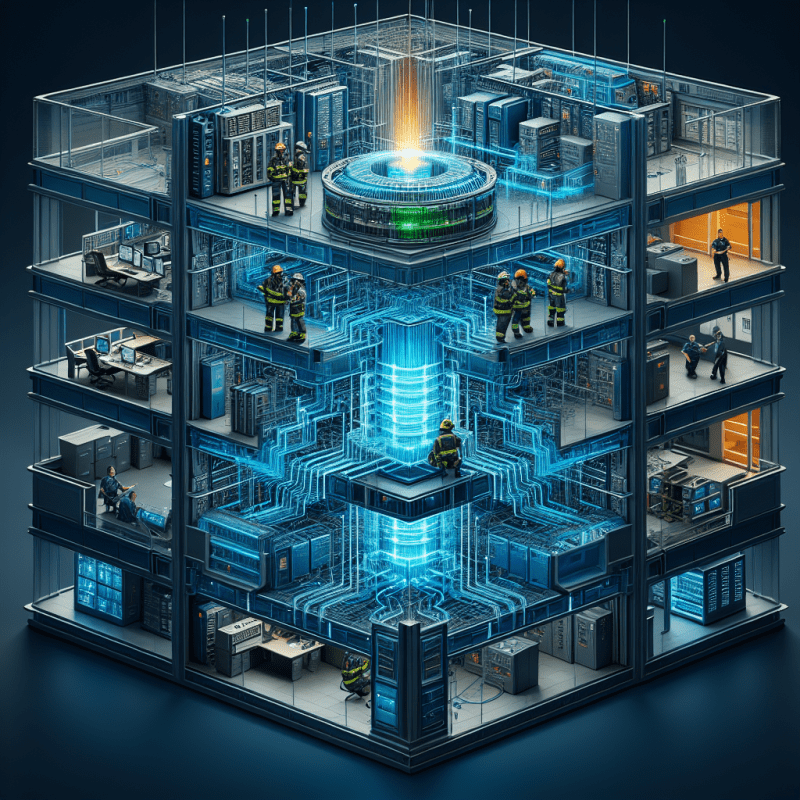
- The Critical Role of ERCES Battery Backup Systems
- Understanding NFPA 1225 and IFC Section 510 Battery Requirements
- Key Components of a Robust BDA/ERRCS Power Supply
- Designing for Resilience: Lexico’s Approach to ERRCS Power
- Testing and Maintenance: Ensuring Your ERCES Battery Backup Stays Ready
- The Cost of Neglect: Why Skimping on Backup is a Dangerous Bet
- Lexico: Your Partner in Critical Communication Power
- Frequently Asked Questions About ERCES Battery Backup
The Unseen Lifeline: Why ERCES Battery Backup is Non-Negotiable for Public Safety
Imagine a scenario where emergency services are needed most – a fire, a medical crisis, or a security threat within a building. First responders, like firefighters and police officers, rush in. They rely on their two-way radios to communicate with their teams, get critical updates, and coordinate their efforts. But what if, deep inside the building, their radios suddenly go silent? This frightening possibility becomes a reality when in-building wireless communication systems fail, especially during a power outage.
This is precisely why Emergency Responder Radio Communication Systems (ERRCS), also known as Public Safety DAS, are so vital. These systems ensure that first responders can communicate reliably, even in basements, stairwells, or high-rise floors where signals are usually weak. However, an ERRCS is only as good as its power supply. If the building loses power, and the ERRCS doesn’t have a reliable backup, those critical communication lines go dark. This blog post will explore the absolute necessity of robust ERCES battery backup systems, covering the essential standards, key components, expert design, rigorous testing, and ongoing maintenance needed to keep these unseen lifelines fully operational when they’re needed most. Lexico specializes in ensuring your building’s ERRCS, including its vital power backup, is always ready.
The Critical Role of ERCES Battery Backup Systems
When emergencies strike, every second counts. The ability of first responders to communicate clearly and continuously can mean the difference between life and death. Buildings, especially large or complex ones, often create ‘dead zones’ where external public safety radio signals cannot reach. This is where an in-building wireless system like ERRCS steps in, acting as an amplifier and distributor for these signals. Yet, even the best system becomes useless without power.
Why Uninterrupted Communication Matters
First responders entering a building during an emergency face countless dangers. They depend on their radios to relay vital information, coordinate tactics, and call for help if needed. Losing communication means losing control, increasing risks for both the responders and the building’s occupants. Think about a firefighter deep inside a smoke-filled high-rise; a lost radio signal could isolate them from their team, making rescue efforts far more difficult and dangerous. Reliable first responder communication reliability is not a luxury; it’s a fundamental safety requirement.
The Power Outage Threat to Public Safety DAS
Power outages can happen for many reasons: severe weather, equipment failure, or even planned maintenance. When the main electricity to a building goes out, most systems shut down. For an ERRCS, this cannot happen. Public Safety DAS systems must remain operational during these critical moments to ensure that communication isn’t interrupted. Without a robust public safety DAS battery backup, the entire system would fail just when it’s most needed, leaving first responders in a dangerous silent zone. This vulnerability highlights the absolute necessity of a well-designed and maintained power backup system, ensuring that the in-building wireless lifeline never goes dark.
Understanding NFPA 1225 and IFC Section 510 Battery Requirements
To ensure that ERRCS systems are always ready, strict rules and regulations are in place. These codes are not just suggestions; they are legally binding mandates designed to protect lives. Understanding these requirements is crucial for any building owner or manager.
The Mandate for Reliable Power
The National Fire Protection Association (NFPA) and the International Fire Code (IFC) set the standards for life safety. Specifically, NFPA 1225 (which replaced NFPA 1221 in 2022) and IFC Section 510 outline the precise requirements for ERRCS battery backup systems. These codes demand that emergency responder radio communication systems must have an independent, reliable power source that can operate the system for a specific duration, even if the building’s main power supply fails. This ensures code compliance ERRCS and, more importantly, keeps first responders safe.
What ‘Supervisory’ and ‘Operational’ Mean
The codes often talk about 12 hours operational and 24 hours supervisory for the battery backup system. What do these terms mean? ‘Operational’ refers to the time the system can actively amplify and transmit radio signals, allowing first responders to communicate. This is typically required for at least 12 hours. ‘Supervisory’ refers to the time the system can monitor itself and report its status, even if it’s not actively amplifying signals. This usually requires a longer duration, often 24 hours. Both are essential for ensuring the system’s readiness and for meeting NFPA 1225 battery requirements and IFC Section 510 power regulations. These durations are critical to cover a wide range of emergency scenarios.
The Importance of Code Compliance for Building Owners
For building owners, complying with these fire and safety codes is non-negotiable. Failing to meet the emergency radio system battery backup requirements can lead to significant problems. This includes hefty fines, delays in obtaining occupancy permits, and even legal liabilities if an incident occurs and communication failure is a factor. Beyond the legal and financial implications, non-compliance puts lives at risk. Lexico guides building owners through these complex regulations, helping them achieve full compliance and peace of mind by installing and maintaining compliant in-building wireless power solutions.
Key Components of a Robust BDA/ERRCS Power Supply
An effective critical communication power system for ERRCS isn’t just one component; it’s a carefully designed network of technologies working together. Each part plays a specific role in ensuring continuous operation during a power outage.
The Heart of the System: Bi-Directional Amplifiers (BDAs)
Bi-Directional Amplifiers (BDAs), sometimes referred to as signal booster power systems, are the core of an ERRCS. These devices pick up weak public safety radio signals from outside, boost them, and distribute them throughout the building. They also do the reverse, taking signals from inside the building and boosting them back out to responder networks. While BDAs are powerful, they are electronic devices that require constant electricity to function. Without a stable BDA power supply, the BDA becomes completely inoperative, rendering the entire system useless. This highlights why ensuring consistent power to the BDA is paramount for system uptime public safety.
Dedicated Power Sources: AC and DC Power
ERRCS systems typically draw their primary power from the building’s standard alternating current (AC) electricity supply. However, AC power is susceptible to outages. This is where direct current (DC) power comes into play. The ERRCS battery backup system operates on DC power, which is stored in specialized batteries. When the AC power fails, the system automatically switches to this DC battery power. This seamless transition is essential for maintaining uninterrupted critical power for first responders, ensuring that the radio communication system never loses its lifeline, even for a moment.
The Uninterruptible Power Supply (UPS) for ERRCS
An Uninterruptible Power Supply (UPS) is a critical component that bridges the gap between the moment AC power is lost and when the battery backup fully takes over, or a generator kicks in. A UPS for ERRCS provides instant power, preventing any disruption to the system’s operation. It’s like a buffer, ensuring that the BDAs and other components receive a continuous flow of electricity without even a flicker. This instant switchover is vital for first responder communication reliability, as even a brief power interruption could cause a loss of critical radio contact during an emergency.
Advanced Battery Technologies for Public Safety DAS Battery
The batteries used for public safety DAS battery backup systems are not your everyday batteries. They are specially designed for reliability, longevity, and performance under critical conditions. While different types exist, such as Valve-Regulated Lead-Acid (VRLA) and sometimes Lithium-ion, the key is their ability to provide stable, consistent power for the durations mandated by codes. These emergency radio system battery units are engineered to handle continuous charging and discharging cycles and maintain their capacity over many years. Proper selection of battery technology for ERRCS is crucial for the overall performance and reliability of the backup system, making sure it can stand ready for hours on end.
Generators: The Ultimate Backup for Extended Outages
While battery backup systems are excellent for short-term power interruptions, some emergencies can last for many hours or even days. In such cases, generators become the ultimate backup. Integrating a generator with the BDA power supply system provides extended power capabilities, ensuring that the ERRCS can continue to function indefinitely. This is particularly important for critical infrastructure, large commercial buildings, and high-rise structures where prolonged communication is non-negotiable. The combination of robust batteries and a reliable generator offers the highest level of redundancy for critical communication power, guaranteeing that the system remains online regardless of the duration of the main power failure.
Designing for Resilience: Lexico’s Approach to ERRCS Power
Designing an ERRCS, especially its power backup, is a complex task that requires specialized knowledge and tools. Lexico approaches every project with meticulous planning to ensure maximum resilience and compliance.
Expert System Design and Engineering (iBwave)
At Lexico, we begin every project with expert system design and engineering. Using advanced tools like iBwave, we create a precise blueprint for your ERRCS, including the crucial ERRCS battery backup system. This process involves analyzing your building’s unique layout, materials, and potential signal obstructions. Our engineers carefully plan the placement of BDAs, antennas, and, most importantly, the power supply components and battery backup units. This comprehensive design ensures that critical power for first responders is not an afterthought but an integrated part of a robust, reliable, and compliant system from the very beginning. Proper design prevents costly errors and ensures optimal performance.
Choosing the Right Equipment and Manufacturers
The quality of components directly impacts the reliability of your ERRCS and its power backup. Lexico partners with industry-leading manufacturers such as Nextivity, Fiplex, Comba, ADRF, and Westell to source the most dependable BDA components and battery solutions. We carefully select the right ERRCS battery backup equipment that meets stringent performance standards and code requirements. This includes evaluating battery capacity, lifespan, charging mechanisms, and overall durability. Our expertise ensures that your building receives a customized solution, matching the correct in-building wireless power components to your specific needs and regulatory obligations.
Seamless Installation by Certified Professionals
Even the best design and equipment can fail if not installed correctly. Lexico’s team of certified professionals ensures a seamless installation process for your entire ERRCS, including the emergency power systems. This involves precise wiring, proper grounding, and strategic placement of battery units and charging systems. Our technicians follow strict safety protocols and industry best practices to ensure every connection is secure and every component functions optimally. A professionally installed public safety DAS battery system means reliable performance, minimizing the risk of failures and maximizing system uptime public safety during critical moments. We ensure that every aspect of the installation adheres to the highest standards, guaranteeing compliance and dependability.
Testing and Maintenance: Ensuring Your ERCES Battery Backup Stays Ready
Installation is just the beginning. To guarantee that your ERRCS battery backup system remains fully functional and compliant, regular testing and ongoing maintenance are absolutely essential. Neglecting these steps can lead to dangerous surprises during an actual emergency.
Initial Acceptance Testing and Commissioning
Once installed, an ERRCS and its power backup undergo rigorous initial acceptance testing and commissioning. This isn’t just a quick check; it’s a comprehensive verification process. Lexico conducts thorough signal benchmark testing and grid testing to ensure complete coverage throughout the building. More critically, we verify the ERRCS battery backup functionality by simulating power outages. This ‘stress test’ confirms that the batteries switch on seamlessly, provide power for the required duration, and that the entire system remains operational. Detailed documentation of these tests is provided to demonstrate code compliance ERRCS and system readiness to local authorities, ensuring your building receives its occupancy permit without issue.
Regular Battery Monitoring ERRCS and Health Checks
Batteries, even high-quality ones, degrade over time. Their capacity can diminish, and their ability to hold a charge can weaken. That’s why regular battery monitoring ERRCS is so important. Proactive health checks involve assessing battery voltage, current, and temperature to catch potential issues before they lead to failure. Many modern systems incorporate automated monitoring tools that can alert building managers to problems. However, manual inspections by trained professionals are also vital to ensure the physical integrity of the batteries and connections. This ongoing vigilance prevents unpleasant surprises and ensures critical power for first responders is always available.
Preventative ERRCS Maintenance Plans
Lexico offers comprehensive ERRCS maintenance plans designed to keep your system, especially its power backup, in peak condition. These plans typically include quarterly or annual inspections, where our technicians check all components, perform necessary adjustments, and clean connections. Crucially, battery replacement schedules are built into these plans. Batteries have a finite lifespan, and replacing them before they fail is key to maintaining system uptime public safety. Regular maintenance not only ensures compliance with NFPA 1225 battery requirements but also extends the life of your entire ERRCS, providing continuous first responder communication reliability for years to come. Investing in maintenance is investing in safety.
Compliance Audits and Retesting
Local authorities and fire departments often require periodic compliance audits and retesting of ERRCS, including its power backup. These retests confirm that the system continues to meet all current codes and performs as expected. Lexico assists building owners with these retesting requirements, ensuring that all necessary checks are performed, and documentation is updated. Staying current with these audits prevents potential penalties and confirms that your emergency radio system battery backup remains certified and ready. Our team ensures that your building remains fully compliant, avoiding any risks associated with outdated or unverified systems.
The Cost of Neglect: Why Skimping on Backup is a Dangerous Bet
Ignoring the requirements for ERRCS battery backup or cutting corners on its installation and maintenance can have severe and far-reaching consequences that extend far beyond financial penalties. It’s a gamble with public safety and your building’s future.
Fines and Legal Penalties
Building owners who fail to comply with NFPA 1225 battery requirements and IFC Section 510 power regulations face significant legal and financial repercussions. This can include substantial fines levied by local fire marshals or building departments. Non-compliance can also lead to delayed or denied occupancy permits, preventing a building from being used until the system is brought up to code. These direct costs can quickly outweigh any perceived savings from neglecting a robust public safety DAS battery solution.
Risk to Life and Property
The most profound cost of neglecting emergency radio system battery backup is the risk to human life and property. In a real emergency, such as a fire, earthquake, or active threat, a failing communication system can prevent first responders from coordinating effectively. This can lead to slower response times, trapped occupants, and increased danger for emergency personnel. The inability to communicate can turn a manageable crisis into a catastrophic one, compromising first responder communication reliability when it’s needed most. This represents an unacceptable risk that no building owner should be willing to take.
Reputation Damage for Building Owners
Beyond legal and safety implications, a building’s reputation can suffer irreparable damage if a communication failure during an emergency leads to negative outcomes. Public knowledge of non-compliance or a faulty critical communication power system can severely harm a building owner’s standing in the community and among tenants. In today’s interconnected world, news travels fast, and a lapse in safety protocols can lead to lasting reputational damage, tenant loss, and decreased property value. Investing in a reliable ERRCS battery backup system is an investment in your building’s safety, compliance, and long-term reputation.
Lexico: Your Partner in Critical Communication Power
Ensuring that your building’s ERRCS and its essential battery backup system are always operational is a complex, critical task. It requires expert design, precise installation, rigorous testing, and ongoing maintenance to meet stringent safety codes and guarantee critical power for first responders.
Lexico stands as a leader in comprehensive in-building wireless power solutions, specializing in ERRCS and Public Safety DAS. Our expertise covers the entire lifecycle of your system, from initial consultation and advanced iBwave design to professional installation, meticulous signal benchmark testing, and robust ERRCS maintenance plans. We are dedicated to delivering reliable, code-compliant solutions that keep first responders connected and building occupants safe. With Lexico, you gain a trusted partner committed to excellence in public safety DAS battery systems and all aspects of emergency communication. Don’t leave your building’s safety to chance; partner with the experts.
Frequently Asked Questions About ERCES Battery Backup
What is the required battery backup time for an ERRCS?
Typically, NFPA 1225 and IFC Section 510 require ERRCS battery backup systems to provide at least 12 hours of operational power and 24 hours of supervisory power after a main power failure. These durations are crucial to ensure that emergency communication remains active for extended periods during a crisis.
How often should ERRCS batteries be tested or replaced?
Batteries for ERRCS should undergo regular battery monitoring ERRCS and health checks, often as part of quarterly or annual maintenance plans. While lifespans vary, most batteries require replacement every 3-5 years, or sooner if testing indicates a decline in performance. Adhering to manufacturer guidelines and local code requirements is essential.
Is a generator required in addition to battery backup for ERRCS?
Not always, but often. While ERRCS battery backup handles short-term outages, generators provide power for extended periods. For many critical facilities, high-rise buildings, or jurisdictions with specific requirements, a generator might be required in addition to batteries to ensure continuous emergency radio system battery operation beyond the battery’s capacity.
Who is responsible for ensuring ERRCS battery backup compliance?
The building owner or manager is ultimately responsible for ensuring that their ERRCS, including its BDA power supply and public safety DAS battery, meets all local and national fire and building codes. Partnering with experienced professionals like Lexico can help navigate these complex code compliance ERRCS requirements.
Can I install an ERRCS battery backup system myself?
No, installing an ERRCS battery backup system requires specialized knowledge, specific equipment, and adherence to strict safety and code requirements. Attempting a self-installation can lead to non-compliance, system failures, and potential safety hazards. It is critical to use certified professionals who are experts in in-building wireless power systems to ensure proper design, installation, testing, and documentation.
Ensure your building is truly safe and compliant with a reliable ERRCS battery backup system. Don’t wait for an emergency to discover your system’s weaknesses. Contact Lexico today for a professional consultation, system assessment, or to discuss your ERRCS installation and maintenance needs. Our experts are ready to provide the peace of mind that comes with knowing your critical communication systems are always ready.