
- The Urgent Need for Reliable In-Building Public Safety Communication
- Understanding Emergency Responder Radio Communication Systems (ERRCS)
- Navigating the Regulatory Landscape: Ensuring Building Safety Compliance
- The Future of In-Building Public Safety: Advanced Technologies and Design
- Beyond Installation: The Critical Role of ERRCS Testing and Maintenance
- Lexico’s Expertise in Shaping the Future of In-Building Public Safety
- Frequently Asked Questions (FAQs) About ERRCS and Public Safety DAS
Introduction: Securing Our Safest Spaces
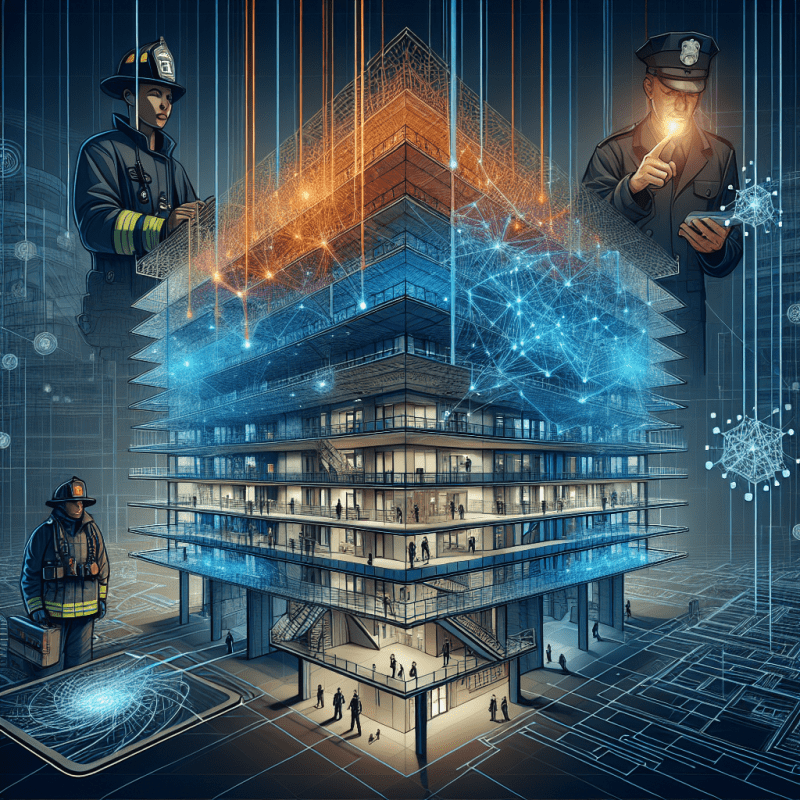
Imagine a critical emergency unfolding inside a large building. Firefighters rush in, paramedics administer aid, and police secure the scene. Their ability to communicate clearly and reliably is not just convenient; it is absolutely vital for saving lives. Yet, many modern buildings, with their dense construction materials and sprawling layouts, can become ‘dead zones’ for crucial public safety radio signals. This reality poses a significant challenge, threatening the very safety of both emergency responders and the building’s occupants. Understanding and addressing this challenge is at the heart of ensuring public safety in the future. This post will explore the critical role of Emergency Responder Radio Communication Systems (ERRCS), often referred to as Public Safety DAS, and how Lexico is at the forefront of providing these essential in-building wireless solutions.
The Urgent Need for Reliable In-Building Public Safety Communication
Buildings today are marvels of modern engineering, featuring concrete, steel, and energy-efficient glass that enhance their structural integrity and aesthetics. However, these same materials, along with underground levels, stairwells, and expansive footprints, often act as formidable barriers to radio frequency (RF) signals. For first responders, this means their portable two-way radios, designed to be their lifelines, can become useless inside these structures. Without a robust and clear radio signal, firefighters cannot coordinate their efforts, police officers cannot report critical updates, and paramedics cannot call for backup or communicate patient status effectively. This lack of communication can lead to dangerous delays, increased risks for responders, and potentially tragic outcomes for those in distress. Ensuring uninterrupted public safety radio coverage within every corner of a building is no longer a luxury; it is a fundamental requirement for building safety compliance and effective emergency response.
Understanding Emergency Responder Radio Communication Systems (ERRCS)
An Emergency Responder Radio Communication System (ERRCS), also known as a Public Safety Distributed Antenna System (DAS) or BDA (Bi-Directional Amplifier) system, is a dedicated in-building wireless solution designed to solve the problem of poor radio coverage. These systems are engineered to capture weak outdoor public safety radio signals, amplify them, and then distribute them throughout a building’s interior. Crucially, they also amplify the signals from inside the building back out to the external radio network, ensuring a two-way flow of critical communication. Think of it as a specialized cellular network, but exclusively for first responders. The core components of an ERRCS typically include an outdoor antenna that receives and transmits signals, a Bi-Directional Amplifier (BDA) that boosts these signals, and a network of indoor antennas connected by specialized cabling that broadcasts the amplified signal to all necessary areas within the building, including basements, elevator shafts, and stairwells. The goal of a Public Safety DAS is to provide ubiquitous and reliable radio coverage, ensuring every first responder has a clear signal, regardless of their location within the structure. This technology ensures that even in complex structures, first responder communication remains unbroken.
The Role of Bi-Directional Amplifiers (BDAs) in Public Safety DAS
At the heart of many ERRCS installations lies the Bi-Directional Amplifier, or BDA. These powerful signal boosters are specifically designed to amplify weak RF signals in both directions. They receive the faint radio signals from outside a building, strengthen them significantly, and then feed them into the indoor antenna system for distribution. Simultaneously, BDAs capture the weak signals from first responders’ radios inside the building, amplify those signals, and transmit them back to the external public safety network. This two-way amplification is critical for maintaining seamless communication. Modern BDAs are highly sophisticated, often featuring filtering capabilities to prevent interference with other wireless systems and robust monitoring features to ensure continuous operation. Choosing the right BDA equipment, such as those from reputable manufacturers like Nextivity, Fiplex, Comba, ADRF, or Westell, is a vital step in designing a reliable and compliant ERRCS. These signal boosters are the backbone of reliable public safety radio coverage.
Navigating the Regulatory Landscape: Ensuring Building Safety Compliance
The implementation of ERRCS is not merely a best practice; it is often a legal mandate driven by strict regulations and codes. These codes are in place to ensure a minimum level of public safety radio coverage within buildings, safeguarding the lives of emergency responders and the public. Two of the most significant regulatory bodies and their associated codes are the National Fire Protection Association (NFPA) and the International Fire Code (IFC). Navigating these complex requirements demands expert knowledge and meticulous attention to detail. Understanding and adhering to these standards is fundamental to achieving building safety compliance.
NFPA 1225: The Standard for Emergency Services Communications
NFPA 1225 is a cornerstone standard for emergency services communications, having recently superseded and integrated aspects of NFPA 72 (National Fire Alarm and Signaling Code) Annex O and NFPA 1221 (Standard for the Installation, Maintenance, and Use of Emergency Services Communications Systems). This comprehensive standard outlines the requirements for designing, installing, maintaining, and testing ERRCS. It specifies crucial parameters such as the required signal strength (often -95 dBm or better in 95-99% of designated areas), acceptable signal delay, and system redundancy. Compliance with NFPA 1225 ensures that the installed ERRCS will reliably support fire, police, and EMS operations during emergencies. This standard is continuously updated to reflect advancements in technology and lessons learned from real-world events, making ongoing professional engagement essential for any facility owner.
IFC Section 510: International Fire Code Requirements
Complementing NFPA 1225, IFC Section 510 specifically addresses emergency responder radio coverage in new and existing buildings. Many local jurisdictions adopt the International Fire Code, making Section 510 a legally binding requirement. This section often mandates a minimum level of radio coverage throughout the building, typically requiring a professional radio coverage assessment to determine if a Public Safety DAS is necessary. It also specifies requirements for system monitoring, battery backup, and regular testing to ensure the system’s operational readiness. Understanding the nuances of IFC Section 510, and how it interacts with local amendments, is critical for project planning and successful ERRCS deployment. Adherence to this code is a key component of public safety compliance.
FCC Regulations and Licensing for Signal Boosters
Beyond fire codes, the Federal Communications Commission (FCC) also plays a vital role in regulating wireless signal boosters, including BDAs used in ERRCS. The FCC sets technical standards for these devices to prevent interference with licensed radio services. Proper registration and, in some cases, licensing of ERRCS signal boosters with the FCC are required. Owners must ensure their systems operate within authorized frequencies and power limits. Non-compliance with FCC regulations can result in fines and mandatory system shutdowns. Therefore, any reputable ERRCS provider must possess a thorough understanding of FCC requirements, ensuring all installations are fully compliant and legally operable. This aspect is crucial for the lawful operation of public safety radio coverage systems.
The Future of In-Building Public Safety: Advanced Technologies and Design
The field of in-building wireless solutions for public safety is continuously evolving, driven by advancements in radio technology and the increasing complexity of modern structures. The future of in-building public safety is characterized by more sophisticated systems, intelligent design, and greater integration. Moving beyond basic signal amplification, these advanced ERRCS are designed to be robust, adaptable, and future-proof, capable of supporting the next generation of first responder communication.
Digital vs. Analog: Embracing P25 and LTE Technologies
Historically, public safety radio systems were predominantly analog. However, the shift towards digital radio, particularly Project 25 (P25) standards, has introduced new complexities and capabilities. Digital signals offer clearer audio, enhanced encryption, and more efficient use of spectrum, but they also require ERRCS to be precisely tuned and configured to support them. Future ERRCS are increasingly designed to be ‘P25 capable,’ ensuring compatibility with the digital radio systems used by most first responder agencies today. Furthermore, the emergence of dedicated public safety LTE networks, such as FirstNet in the United States, signals another major shift. While ERRCS traditionally focuses on Land Mobile Radio (LMR) bands, future in-building public safety solutions may also incorporate or integrate with LTE capabilities, providing broadband data for critical applications. This evolution requires flexible and adaptable ERRCS infrastructure.
Professional Design with iBwave: Precision and Performance
Achieving optimal public safety radio coverage is not a matter of guesswork; it requires meticulous planning and professional design. Tools like iBwave play an indispensable role in this process. iBwave software allows engineers to create highly accurate 3D models of buildings, simulating radio signal propagation and identifying potential coverage gaps before any equipment is installed. This predictive modeling ensures that every antenna is placed strategically, every BDA is correctly sized, and every cable run is optimized for performance. A professional ERRCS design developed with iBwave minimizes costly rework, guarantees compliance with signal strength requirements, and ensures the system delivers reliable coverage throughout the entire building. This sophisticated approach to design is fundamental to the efficacy of any Public Safety DAS.
Scalability, Adaptability, and Future-Proofing ERRCS
Modern buildings are not static; they undergo renovations, tenant changes, and technology upgrades. A truly forward-thinking ERRCS must be scalable and adaptable to these changes. Future systems will need to support a wider range of frequencies and technologies, anticipating the needs of tomorrow’s first responders. This means designing systems with built-in flexibility, allowing for easy expansion or modification without requiring a complete overhaul. The concept of ‘future-proofing’ involves considering emerging standards and potential technological shifts, such as higher bandwidth requirements or new communication protocols, during the initial design phase. Investing in an adaptable in-building wireless solution today ensures long-term public safety compliance and operational efficiency for years to come.
Beyond Installation: The Critical Role of ERRCS Testing and Maintenance
Installing an ERRCS is a significant undertaking, but the work does not end there. To guarantee continuous, reliable public safety radio coverage, the system must undergo rigorous testing, consistent monitoring, and ongoing maintenance. These post-installation procedures are just as critical as the initial design and deployment, ensuring the system remains compliant and operational when emergencies strike. Without proper ERRCS testing and DAS maintenance, even the best-designed system can degrade over time, potentially failing when it is needed most.
Signal Benchmark and Grid Testing: Verifying Coverage
Before an ERRCS can receive final approval, comprehensive signal benchmark testing and grid testing are mandatory. Signal benchmark testing involves measuring the existing radio signal strength throughout the building before the ERRCS installation, establishing a baseline. After installation, grid testing is performed, where technicians systematically measure and record signal strength in a grid pattern across all areas of the building, including basements, stairwells, and elevator lobbies. These tests verify that the ERRCS is delivering the required signal strength (e.g., -95 dBm) in 95-99% of all areas, as mandated by NFPA 1225 and IFC Section 510. The results are meticulously documented and provided to the Authority Having Jurisdiction (AHJ) for approval. This critical validation process ensures that the installed Public Safety DAS meets all performance criteria and will reliably support first responder communication.
Annual Inspections and Ongoing Maintenance for Public Safety DAS
ERRCS are complex systems that require regular attention to maintain peak performance and compliance. Annual inspections are a fundamental requirement of fire codes and involve a thorough check of all system components. This includes inspecting antennas, BDAs, cabling, power supplies, and battery backup units. Technicians will also re-test critical areas to ensure signal strength has not degraded. Beyond annual checks, ongoing DAS maintenance can involve proactive monitoring of the system’s health, addressing any alarms or alerts promptly, and performing necessary repairs or component replacements. Neglecting regular maintenance can lead to system failures, non-compliance, and potential penalties. A proactive maintenance schedule ensures that the critical communication infrastructure remains operational and dependable year after year.
Why Continuous Performance is Crucial for First Responder Communication
The lives of first responders and building occupants depend on the unwavering reliability of ERRCS. A system that works intermittently or fails during an emergency is no system at all. Continuous performance means that public safety radio coverage is not just present, but consistently strong and clear, every second of every day. This reliability allows firefighters to coordinate search and rescue, police to manage incidents, and paramedics to deliver urgent medical care without communication breakdowns. Investing in robust ERRCS, backed by expert testing and maintenance, is an investment in human safety. It is a commitment to providing first responders with the tools they need to perform their duties effectively and safely within every building.
Lexico’s Expertise in Shaping the Future of In-Building Public Safety
At Lexico, we are not just installers; we are dedicated partners in ensuring the highest standards of in-building public safety. Our comprehensive approach to ERRCS goes beyond mere compliance, focusing on delivering robust, reliable, and future-proof solutions that truly serve the needs of first responders and building owners. With years of specialized experience, Lexico stands as a leader in designing, deploying, and maintaining critical communication infrastructure. We understand the nuances of the regulatory landscape and the technical intricacies of sophisticated wireless systems. Our commitment is to provide unparalleled public safety radio coverage for every project.
Our team of certified professionals leverages state-of-the-art tools and methodologies, including advanced iBwave design software, to ensure precision and performance from concept to completion. We work with leading manufacturers like Nextivity, Fiplex, Comba, ADRF, and Westell to select the optimal BDA and Public Safety DAS equipment for each unique building environment. From initial signal benchmark testing to meticulous grid testing and ongoing DAS maintenance, Lexico manages every phase of your ERRCS project. We ensure complete adherence to NFPA 1225 and IFC Section 510, guaranteeing your building meets all necessary code compliance requirements. Lexico’s expertise ensures that your in-building wireless solutions are not only operational but also optimized for long-term reliability and adaptability, protecting lives and investments. We are dedicated to delivering safer buildings through superior first responder communication solutions.
Frequently Asked Questions (FAQs) About ERRCS and Public Safety DAS
What is the main purpose of an ERRCS?
An Emergency Responder Radio Communication System (ERRCS), also known as a Public Safety DAS, is designed to provide reliable and consistent two-way radio communication for first responders (fire, police, EMS) inside buildings. Its primary purpose is to eliminate ‘dead zones’ where traditional radio signals cannot penetrate, ensuring clear communication during emergencies and enhancing public safety.
What are the key regulations governing ERRCS installations?
The primary regulations are NFPA 1225 (National Fire Protection Association) and IFC Section 510 (International Fire Code). These codes specify signal strength requirements, testing protocols, maintenance standards, and other criteria that must be met for building safety compliance. FCC regulations also apply to the use of signal boosters (BDAs) to prevent interference.
How often should an ERRCS be tested and maintained?
ERRCS typically require annual inspections and testing to ensure ongoing functionality and compliance with fire codes. This includes re-verifying signal strength through grid testing and checking all system components, including battery backup. Some jurisdictions may also require periodic re-certification.
Can any building benefit from a Public Safety DAS?
While all buildings can benefit from enhanced safety, the requirement for a Public Safety DAS is typically triggered by building size, construction materials, and local code mandates. Buildings with basements, multiple floors, large footprints, or dense construction (like concrete and steel) are most likely to experience signal degradation and require an ERRCS to meet public safety radio coverage standards.
What is a Bi-Directional Amplifier (BDA) and why is it important?
A BDA is a critical component of an ERRCS/Public Safety DAS that amplifies weak radio signals in both directions. It boosts signals coming into the building from outside and also boosts signals from first responders’ radios inside the building back out to the external network. Without a BDA, the system would only work one-way or not at all, making it essential for clear, two-way first responder communication.
Final Call-to-Action: Partner with Lexico for Unmatched Public Safety
Ensuring reliable in-building public safety communication is a critical responsibility for building owners and managers. The stakes are simply too high to leave it to chance. At Lexico, we possess the specialized expertise, cutting-edge technology, and unwavering commitment to deliver robust Emergency Responder Radio Communication Systems that meet and exceed all regulatory requirements. From initial design and expert installation to meticulous testing and ongoing maintenance, we provide a complete solution for your public safety DAS needs. Do not compromise on the safety of your occupants and the first responders who protect them. Contact Lexico today to learn how our comprehensive ERRCS solutions can secure your building’s future and provide invaluable peace of mind.
Ensure Your Building's Safety - Contact Lexico Today