
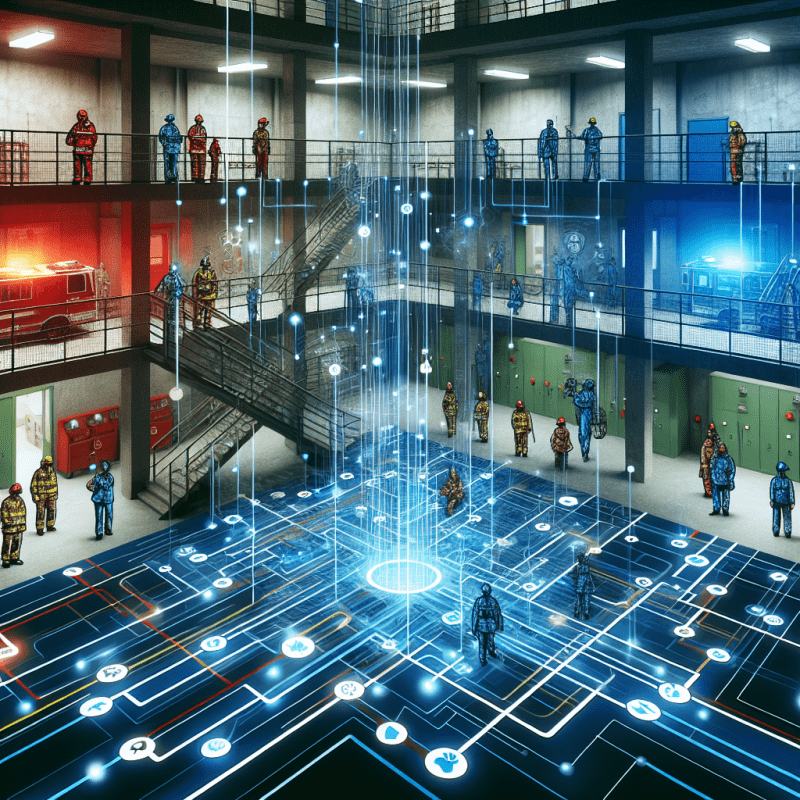
When it comes to building safety, few things are as critical as ensuring first responders can talk to each other during an emergency. This vital communication relies on specialized in-building wireless systems known as Emergency Responder Radio Communication Systems, or ERRCS. Sometimes these are also called Public Safety DAS (Distributed Antenna Systems) or utilize BDAs (Bi-Directional Amplifiers).
Despite their crucial role, many misconceptions surround ERRCS. Building owners, developers, and facility managers might hear conflicting information that leads to confusion or delays in implementing these essential life safety systems. Understanding the truth behind these myths is key to ensuring your building is safe and compliant. This post will clear up some of the most common misunderstandings about ERRCS.
- Myth 1: Regular Cell Signal is Enough for First Responders
- Myth 2: ERRCS/Public Safety DAS is Optional or Only for Certain Buildings
- Myth 3: Installing a BDA/ERRCS is a Simple Antenna Job
- Myth 4: Any Electrician or General Contractor Can Install ERRCS
- Myth 5: Once Installed, an ERRCS System is Good Forever
- Myth 6: ERRCS is Unnecessarily Expensive and Complex
- Myth 7: ERRCS Only Matters in High-Rise Buildings
- Myth 8: Wireless Systems Like Wi-Fi Can Support Public Safety Radios
- Frequently Asked Questions
Myth 1: Regular Cell Signal is Enough for First Responders
A very common myth is that if your building has good cell phone service, first responders will have adequate radio coverage. This is simply not true. While cellular networks are designed for general consumer use, emergency responders use dedicated radio frequency bands.
These public safety frequencies are separate from cellular networks. First responders rely on specialized two-way radios that operate on specific VHF, UHF, 700 MHz, or 800 MHz bands. A strong signal on your smartphone does not mean these critical public safety radio signals can penetrate the concrete, steel, and low-e glass commonly used in modern construction.
Buildings often contain areas where radio signals struggle to reach. These include basements, stairwells, elevator shafts, underground parking garages, and large, complex floor plans. An ERRCS, utilizing components like a Bi-Directional Amplifier (BDA) and a network of antennas (Public Safety DAS), is specifically designed to capture the weak external public safety radio signal, amplify it, and distribute it reliably throughout the entire structure. This ensures clear, uninterrupted communication exactly where first responders need it most during an emergency.
Myth 2: ERRCS/Public Safety DAS is Optional or Only for Certain Buildings
Another significant myth is that installing an ERRCS or Public Safety DAS is optional, a luxury, or only required in specific types of buildings, like very tall skyscrapers. The reality is that building codes and fire codes across the country increasingly mandate robust in-building radio coverage for first responders.
Leading codes, such as the National Fire Protection Association (NFPA) standards, particularly NFPA 1225 (formerly NFPA 1221), and the International Fire Code (IFC), specifically Section 510, require acceptable levels of public safety radio coverage throughout new buildings and often in significantly renovated ones. These codes are adopted and enforced by local Authorities Having Jurisdiction (AHJs), which could be your local fire marshal or building department.
The requirement isn’t based on building height alone. Any building where construction materials or design elements impede critical radio communication can fall under these mandates. Basements, multi-story buildings, or structures with complex layouts can all suffer from poor radio penetration, making an ERRCS necessary for code compliance and, more importantly, for life safety. Ignoring these requirements can lead to delayed occupancy permits, fines, and a severe risk to emergency personnel and building occupants during a crisis.
Myth 3: Installing a BDA/ERRCS is a Simple Antenna Job
Some might think that putting in an ERRCS is as easy as mounting a few antennas on the wall and connecting them. This view drastically underestimates the complexity and precision required for a functional and compliant system. An ERRCS is a sophisticated network designed to meet specific signal strength and clarity requirements mandated by codes and the AHJ.
The process begins with a detailed signal benchmark test to measure existing radio coverage levels inside the building. This involves specialized equipment and knowledge of public safety frequencies. Based on this data, a professional system design is created, often using specialized software like iBwave, to map antenna locations, cable routes, and equipment placement to ensure uniform coverage throughout the building. This design must account for building materials, floor plan layout, potential interference sources, and the specific radio frequencies used by local first responders.
Components like the Bi-Directional Amplifier (BDA) must be carefully selected and configured to match the required frequencies and power levels without causing interference to the public safety network or adjacent channels. The installation involves running specialized low-loss coaxial cable or fiber optic cable, precisely mounting and aiming antennas, installing the BDA unit, batteries for backup power, and often integrating with the building’s fire alarm system. It’s far more than just a simple wiring job; it’s deploying a complex radio frequency infrastructure.
Myth 4: Any Electrician or General Contractor Can Install ERRCS
While electricians and general contractors are essential to building projects, ERRCS installation requires specialized knowledge and certifications beyond standard electrical work. Public safety radio systems operate on sensitive frequencies and must adhere to strict FCC regulations and fire codes. Improper installation can result in interference with public safety networks, system failure, or non-compliance.
Installing an ERRCS requires expertise in radio frequency (RF) technology, signal propagation, antenna theory, cable management for RF systems, and specific knowledge of ERRCS components like BDAs and passive/active DAS elements. Technicians must be familiar with NFPA and IFC code requirements and testing protocols, such as grid testing, to prove coverage levels. They also need to understand FCC rules, including Part 90 regulations that govern signal boosters and the need for carrier coordination.
A qualified ERRCS provider employs technicians with specific training and experience in these critical systems. They understand how to perform benchmark testing, design the system accurately, install components according to manufacturer and code specifications, and conduct rigorous acceptance testing. Choosing a provider without this specialized expertise jeopardizes the system’s performance, reliability, and ultimately, its ability to function when lives are on the line.
Myth 5: Once Installed, an ERRCS System is Good Forever
Believing that an ERRCS is a set-it-and-forget-it system is a dangerous myth. Like any complex electronic system, ERRCS requires ongoing maintenance and regular testing to ensure it remains fully operational and compliant over time. Building conditions can change, equipment can degrade, and the local radio environment might shift.
Fire codes (NFPA 1225, IFC 510) mandate annual testing of ERRCS to verify that required signal coverage levels are maintained throughout the building. This annual test includes a comprehensive check of the signal strength in every critical area (often on a grid pattern), verification of the system’s components, inspection of backup battery power functionality, and confirmation that the system is still communicating properly with the fire alarm panel if required. A failure to perform these annual tests or address issues found during testing can result in the system being non-compliant.
Regular maintenance helps identify potential problems before they cause system failure. Dust buildup, cable damage, component wear, or changes in the external radio signal can all impact performance. A proactive maintenance plan ensures the system’s longevity and reliability. Just as you wouldn’t ignore a fire sprinkler system after installation, neglecting your ERRCS can have severe consequences during an emergency.
Myth 6: ERRCS is Unnecessarily Expensive and Complex
The perceived cost and complexity of ERRCS can be a barrier, leading to the myth that it’s an unreasonable expense. While an ERRCS represents a significant investment, viewing it solely through the lens of cost overlooks its fundamental purpose: ensuring effective communication during life-threatening emergencies. The cost of a delayed response or an inability for first responders to communicate effectively during a fire, medical emergency, or security incident is immeasurable.
ERRCS systems involve specialized technology and require expert design, installation, and testing, which contributes to the cost. Factors influencing the price include the size and complexity of the building, the level of existing signal coverage, the specific frequencies required, the choice of equipment (BDA, DAS components), and the labor involved in design and installation. However, reputable providers like Lexico can assess your building’s specific needs and design a cost-effective solution that meets code requirements without unnecessary complexity or expense.
Furthermore, integrating the ERRCS installation into the initial construction phase of a building is typically more cost-effective than retrofitting a system later. When ERRCS requirements are identified early, pathways for cabling can be incorporated into the design, minimizing disruptive work later on. Framing the cost as a necessary life safety investment, similar to sprinklers or fire alarms, helps put it into the proper perspective. The true cost is the risk of not having reliable communication during an emergency.
Myth 7: ERRCS Only Matters in High-Rise Buildings
While high-rise buildings present unique challenges for radio signal penetration due to their height and construction materials, the need for ERRCS is not limited to them. Signal propagation issues can occur in many types of structures, regardless of height.
Basements and underground levels are notorious dead zones for radio signals. Even standard two or three-story buildings constructed with concrete, brick, or certain types of energy-efficient windows can block or weaken public safety radio frequencies. Complex structures like hospitals, schools, shopping malls, stadiums, and industrial facilities often have internal layouts that create signal shadows, regardless of how many floors they have. Stairwells and elevator shafts, while crucial evacuation paths, are also common areas where signals drop off significantly.
NFPA and IFC codes require testing coverage in all critical areas, including basements, stairwells, and lobbies, and achieving a minimum signal strength threshold (typically -95 dBm). If these areas within any building, regardless of its height, fail to meet the required coverage, an ERRCS is necessary for compliance and safety. The critical factor is reliable communication coverage throughout the entire building where first responders might operate, not just in tall structures.
Myth 8: Wireless Systems Like Wi-Fi Can Support Public Safety Radios
Some may confuse the functionality of Wi-Fi networks or general wireless systems with the requirements for public safety radio communication. This is a critical misunderstanding. Public safety radios use specific, often narrowband, licensed radio frequency spectrum that is entirely separate from the unlicensed bands used by Wi-Fi (2.4 GHz, 5 GHz, 6 GHz).
Wi-Fi networks are designed for data transmission for devices like laptops and smartphones. They operate at different frequencies, use different modulation techniques, and are not built to handle the specific, real-time voice communication needs of first responders using their specialized equipment. Attempting to use a building’s Wi-Fi network for this purpose is technically impossible and non-compliant with regulations.
ERRCS systems are designed specifically to amplify and distribute the public safety radio signals used by local fire, police, and EMS departments. They operate within the regulated frequency bands designated for these agencies. The technology is fundamentally different from consumer or business Wi-Fi and requires components like BDAs and DAS operating on those specific, licensed public safety frequencies to ensure compatibility and proper functionality with first responder radios.
Frequently Asked Questions
What are NFPA 1225 and IFC Section 510?
These are model building and fire codes developed by leading safety organizations. NFPA 1225 focuses specifically on emergency responder communication systems, while IFC Section 510 outlines requirements for emergency responder radio coverage. Many local jurisdictions adopt these codes, making ERRCS installation mandatory in applicable buildings.
What is a Bi-Directional Amplifier (BDA)?
A BDA is a key component of an ERRCS. It’s essentially a signal booster that takes a weak public safety radio signal from outside the building, amplifies it, and sends it into the building’s antenna system (DAS). It also takes the weak signal from inside the building (from a first responder’s radio), amplifies it, and sends it back out to the public safety network. It works in ‘both directions’.
How often does an ERRCS need to be tested?
Fire codes like NFPA and IFC typically require an initial acceptance test upon installation and commissioning, followed by annual testing. This annual test verifies the system’s continued performance and compliance with code requirements, ensuring reliable public safety radio coverage is maintained over time.
What is an Authority Having Jurisdiction (AHJ)?
The AHJ is the organization, office, or individual responsible for enforcing the requirements of a code or standard, or for approving equipment, an installation, or a procedure. For ERRCS, this is often the local fire department or building code official who reviews plans, inspects the installation, witnesses testing, and ultimately grants approval or occupancy.
Does my building need an ERRCS?
Whether your building requires an ERRCS depends on local code adoption and building characteristics. A professional signal benchmark test is the best way to determine if your building has adequate public safety radio coverage according to code requirements. If critical areas within your building fall below mandated signal strength thresholds, an ERRCS will likely be required for compliance and safety.
Ensure Reliable First Responder Communication
Dispelling myths about ERRCS is crucial for ensuring buildings provide the necessary radio coverage for first responders during emergencies. These systems are not optional extras but often mandatory life safety infrastructure required by code. Understanding the complexity involved, the need for specialized expertise, and the importance of ongoing maintenance is key to implementing a reliable system.
Ensuring clear communication for firefighters, police, and paramedics inside your building is an investment in life safety and code compliance. Don’t let misconceptions compromise the ability of emergency responders to do their job effectively within your property. Partnering with experienced professionals is essential to navigating the requirements and implementing a system that performs when it matters most. If you have questions about your building’s public safety radio coverage or need assistance with ERRCS design, installation, testing, or maintenance, reach out to experts who specialize in these critical in-building wireless solutions.
Ensure Your Building's Safety - Contact Lexico Today