
- The Importance of Budgeting for ERRCS Compliance
- Assessing Building Characteristics and ERRCS Cost
- The Cost of Professional Signal Testing and Design
- Hardware Expenses for Public Safety DAS
- Installation Labor and Cabling Requirements
- Permitting, Commissioning, and AHJ Fees
- Ongoing Maintenance and Annual Recertification Costs
- Frequently Asked Questions About ERRCS Budgeting
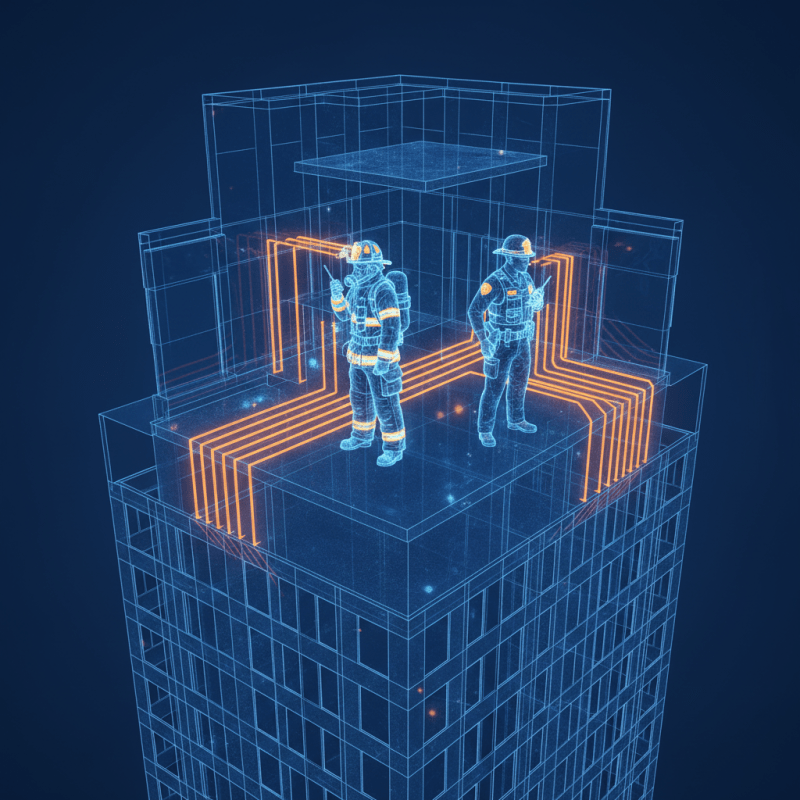
Ensuring the safety of occupants is the most critical responsibility for any building owner or facility manager. While structural integrity and fire alarms are obvious components of safety, reliable communication for first responders is just as vital. This is where an Emergency Responder Radio Communication System (ERRCS) comes into play. These systems ensure that firefighters, police officers, and paramedics can communicate clearly on their two-way radios while inside your building. Without this coverage, rescue operations can be compromised, leading to severe consequences.
However, implementing these systems is not just a matter of safety; it is also a significant financial consideration. Many developers are caught off guard by the costs associated with Public Safety DAS (Distributed Antenna Systems) and BDA (Bi-Directional Amplifier) installations. Often, these requirements surface late in the construction process, threatening to delay the Certificate of Occupancy (CO). Understanding how to budget for ERRCS compliance is essential for keeping your project on track and avoiding unexpected expenses. This guide will break down every cost factor involved, from initial testing to long-term maintenance, providing you with the knowledge to plan effectively.
The Importance of Budgeting for ERRCS Compliance
Budgeting for an ERRCS is not as simple as looking up a price for a piece of hardware. The final cost of a system varies wildly based on the unique characteristics of your property and the specific regulations in your area. Failing to allocate funds for this critical system can lead to massive budget overruns. In some cases, the cost of the system is the only thing standing between a finished building and the legal right to open the doors to the public.
First responders rely on specific radio frequencies to coordinate during emergencies. Building materials like concrete, steel, and energy-efficient glass often block these signals. An ERRCS captures the signal from outside, amplifies it, and distributes it internally. Because this is a life-safety system, it is heavily regulated by codes such as NFPA 1225 and IFC Section 510. These codes dictate strict performance standards, which in turn drive the cost. You are not just paying for equipment; you are paying for guaranteed reliability and code compliance. By understanding the components of the price, you can create a realistic budget that prevents sticker shock later in the project.

Assessing Building Characteristics and ERRCS Cost
The physical attributes of your building are the primary drivers of cost. It is a common misconception that price is determined solely by square footage. While size is a factor, two buildings with the exact same square footage can have drastically different pricing for their BDA system. The complexity of the layout and the materials used in construction play a much larger role in determining the final quote.
Impact of Building Materials
Modern construction often utilizes materials that are excellent for energy efficiency but terrible for radio frequency (RF) penetration. Low-E glass, for instance, acts as a shield against radio signals. If your building has a glass façade with a metallic coating, natural signal from the outside will be severely attenuated, or weakened. This means you will likely need a more robust system with more indoor antennas to compensate for the lack of natural signal entry. Thick concrete walls and metal roofs have similar effects. When budgeting, consider that ‘harder’ buildings require more hardware to ensure coverage.
Wall Density and Interior Layout
The interior layout significantly impacts the design. An open-concept warehouse allows radio waves to travel long distances without obstruction. In this scenario, a single antenna might cover a vast area. Conversely, a hospital or an apartment complex with many interior walls creates a challenging environment. Each wall blocks a portion of the signal. To overcome this, the system design must include more antennas and more cabling to navigate around or through these obstacles. A high density of interior walls increases both equipment and labor costs substantially.
The Cost of Professional Signal Testing and Design
Before you purchase a single amplifier or antenna, you must invest in professional assessment and engineering. This is the foundation of an accurate budget. Skipping this step is the most expensive mistake a building owner can make. Without data, you are simply guessing, which often leads to purchasing a system you do not need or, worse, installing a system that fails inspection.
Signal Benchmark Testing
The first step is a Radio Frequency (RF) Signal Survey, often called benchmark testing. A certified technician walks the entire floor plan of your building with specialized equipment to measure existing signal strength. In some lucky cases, the test may reveal that your building already meets the code requirements without any enhancement. If this happens, your budget for an ERRCS drops to zero, aside from the cost of the test itself. This small upfront investment can save tens of thousands of dollars. If the test shows failing areas, the data collected becomes the blueprint for the system design.
iBwave Design Services
Once the need for a system is confirmed, the data is fed into design software, typically iBwave. This is the industry standard for designing in-building wireless networks. A radio frequency engineer uses this tool to model your building in 3D. They simulate where cables should run and where antennas should be placed to achieve the required coverage (usually 95% to 99% coverage depending on the area). This design phase is not free, but it is critical. It produces a heat map that predicts exactly how the system will perform. This engineering package is also usually required to apply for a permit. Budgeting for high-quality design ensures that the system works right the first time, preventing costly rework.
Hardware Expenses for Public Safety DAS
The hardware makes up a significant portion of the total project cost. The components of a Public Safety DAS must meet rigorous standards. Unlike commercial Wi-Fi gear, these devices must be rugged, reliable, and capable of operating during a disaster. The main components include the Bi-Directional Amplifier (BDA), the Distributed Antenna System (DAS), and the Battery Backup Unit (BBU).
Class A vs. Class B Amplifiers
The BDA is the heart of the system. There are two main types: Class A and Class B. The choice between them is often dictated by the Authority Having Jurisdiction (AHJ) or the radio environment. Class B amplifiers are ‘wideband’ devices. They amplify a broad chunk of frequencies. They are generally less expensive but can amplify noise or interference. Class A amplifiers are ‘narrowband’ or channelized. They are programmed to amplify only the specific frequencies used by local first responders. Class A units are more expensive due to their sophisticated filtering technology, but they are often required in areas with ‘noisy’ radio environments to prevent interference with cell towers.
Antenna Systems and Cabling
The ‘DAS’ part of the system consists of the antennas and the cables connecting them. There are two main architectures: Passive and Active (Fiber). For smaller buildings (typically under 200,000 square feet), a passive system using coaxial cable is standard. It is cost-effective and reliable. For very large venues, high-rises, or campuses, a Fiber DAS may be necessary. Fiber systems use optical cables to transport signals over long distances without loss. While Fiber DAS offers superior performance for large areas, the equipment is significantly more expensive than coaxial solutions. Your budget must reflect the architecture best (and most economically) suited for your building size.
Battery Backup Requirements
Code requirements mandate that the system must continue to work even if the building loses power. This requires a dedicated Battery Backup Unit (BBU). The size of the battery bank depends on the local jurisdiction. NFPA 1225 and IFC 510 typically require the system to operate for 12 or 24 hours on battery power at 100% capacity. These are not small batteries; they are heavy, industrial-grade power systems housed in NEMA-4 rated enclosures (which are water and dust resistant). The cost of these batteries and their heavy-duty enclosures is a non-negotiable line item in your ERRCS compliance budget.
Installation Labor and Cabling Requirements
Labor costs for installing an ERRCS can sometimes exceed the cost of the hardware. This is specialized work that requires trained technicians. It is not a job for a general electrician. The installation involves running thick, rigid coaxial cable through ceilings, shafts, and conduits. The difficulty of the installation environment directly affects the labor hours required.
Cable Pathways and Fire Ratings
One of the biggest variables in labor and material cost is the type of cabling required. Fire codes classify different areas of a building based on their need for survivability. In critical areas, the cable connecting the system components must be survivable for two hours during a fire. There are different ways to achieve this. One method is using 2-hour fire-rated circuit integrity cable. This cable is extremely expensive compared to standard coax and is difficult to install due to its stiffness. Alternatively, installers can build a 2-hour rated enclosure (soffit) around standard cable using drywall, but this adds construction labor. Understanding the pathway survivability requirements of your local fire marshal is crucial for accurate budgeting.
Donor Antenna Installation
Every BDA system needs a ‘donor’ antenna on the roof to catch the signal from the public safety radio tower. Installing this antenna requires a roof penetration, which must be properly sealed to prevent leaks. It also requires a clear line of sight to the radio tower. In some cases, if the signal outside is weak, the donor antenna may need to be mounted on a tall mast or a non-penetrating sled mount. This adds to the installation time and material cost. Furthermore, if the roof is difficult to access or requires a lift to reach, labor costs will increase accordingly.
Permitting, Commissioning, and AHJ Fees
Building owners often overlook the ‘soft costs’ associated with compliance. Just like building a structure requires a permit, installing a BDA requires its own set of permits and approvals. These fees are paid to the local municipality or fire department and can vary from a few hundred dollars to several thousand, depending on the city.
The Permitting Process
Before installation begins, the engineering design must be submitted to the AHJ (Authority Having Jurisdiction) for review. The AHJ is typically the local Fire Marshal’s office. They review the plans to ensure they meet NFPA and IFC codes. Some jurisdictions charge a flat fee for this review, while others charge an hourly rate for the engineer’s time. If the plans are rejected and need revision, this adds time and potential cost to the project. Hiring an experienced integrator who knows the local preferences can minimize these delays.
Grid Testing and Final Sign-Off
Once the system is installed, it must be proven to work. This process is called Commissioning. The final step is the Acceptance Test, often referred to as Grid Testing. The floor plan is divided into a grid (usually 20 or 40 squares per floor). The technician tests the radio signal in every single grid square. To pass, a certain percentage of the grids (usually 90% or 95%) must have strong signal and high audio quality. The AHJ will often attend this final test to witness the results. This testing is labor-intensive and requires calibrated equipment. It is a mandatory part of the project closeout and must be included in your initial budget.
Ongoing Maintenance and Annual Recertification Costs
Budgeting for ERRCS compliance does not stop once the installation is complete. These are active electronic systems that require care to remain compliant. National codes mandate that these systems be inspected and tested annually. If a fire occurs and the system fails because it was not maintained, the liability for the building owner is immense.
Annual Testing and Recertification
Every year, a qualified technician must visit the site to re-test the system. They verify that the batteries are still holding a charge, the amplifier is functioning correctly, and there is no oscillation (feedback) in the system. They also re-check signal levels to ensure nothing in the environment has changed. This annual certification is required to renew the building’s fire safety permits. Owners should budget for a service contract or a recurring annual expense for this service.
Monitoring and Alarm Interface
The BDA system must be monitored 24/7/365. It connects to the building’s fire alarm panel. If the BDA fails, the battery gets low, or the antenna is disconnected, it sends a trouble signal to the fire alarm panel, which then alerts the monitoring company. There may be small ongoing costs associated with monitoring these specific points on your fire alarm system. Additionally, batteries generally have a lifespan of 3 to 5 years and will need replacement, which is a future capital expense to keep in mind.
Frequently Asked Questions About ERRCS Budgeting
How much does an ERRCS typically cost per square foot?
While it is risky to use general rules of thumb due to building complexity, industry averages often range between $0.80 to $2.50 per square foot for a complete system. However, for smaller buildings (under 20,000 sq ft), the price per square foot is higher because the base cost of the BDA and donor antenna remains the same regardless of size. Large warehouses often see lower costs per square foot due to open spaces, while dense hospitals may see costs exceeding the average.
Can I avoid installing a BDA if my building has windows?
Not necessarily. While windows let in light, modern energy-efficient Low-E glass blocks radio waves effectively. It is very common for a building to have plenty of windows but zero public safety radio coverage inside. The only way to know for sure if you can avoid the cost is to perform a professional Signal Benchmark Test to prove to the Fire Marshal that the existing signal is adequate.
Is the annual maintenance really required by law?
Yes. NFPA 1225 and IFC Section 510 explicitly state that the system must be tested and recertified annually. The Fire Marshal has the authority to request inspection records at any time. Failure to produce current records can result in fines or a citation. Regular maintenance ensures the system works when lives are at stake.
What happens if I fail the final Grid Test?
If the system fails the final Grid Test, you cannot get your Certificate of Occupancy until it is fixed. This usually means the system needs adjustment. It could be as simple as re-orienting an antenna or adjusting the amplifier gain. In worse scenarios, it might require adding more antennas or cable. This highlights the importance of paying for a high-quality iBwave design upfront to predict and prevent these failures.
If you are currently planning a new construction project or retrofitting an existing building, do not leave your public safety communications to chance. The financial and safety risks are too high. Lexico specializes in comprehensive ERRCS solutions, handling everything from the initial benchmark testing and custom engineering to expert installation and long-term maintenance. We understand the local codes and how to design systems that pass inspection the first time, protecting both your budget and your building’s occupants. Reach out to us today to discuss your project requirements and secure a detailed, transparent quote.
Ensure Your Building's Safety - Contact Lexico Today