
- Understanding the Challenge: Why Public Safety Radio Signals Fail Inside Buildings
- What is a Bi-Directional Amplifier (BDA)?
- BDAs as the Heart of an ERRCS (Public Safety DAS)
- The Critical Importance of Building Code Compliance
- The Professional Process: From RF Survey to System Commissioning
- The Necessity of Ongoing Testing and Maintenance
- Choosing the Right Partner for Your ERRCS Needs
- Frequently Asked Questions (FAQs) About BDAs and ERRCS
- Conclusion: Ensuring the Lifeline of Communication
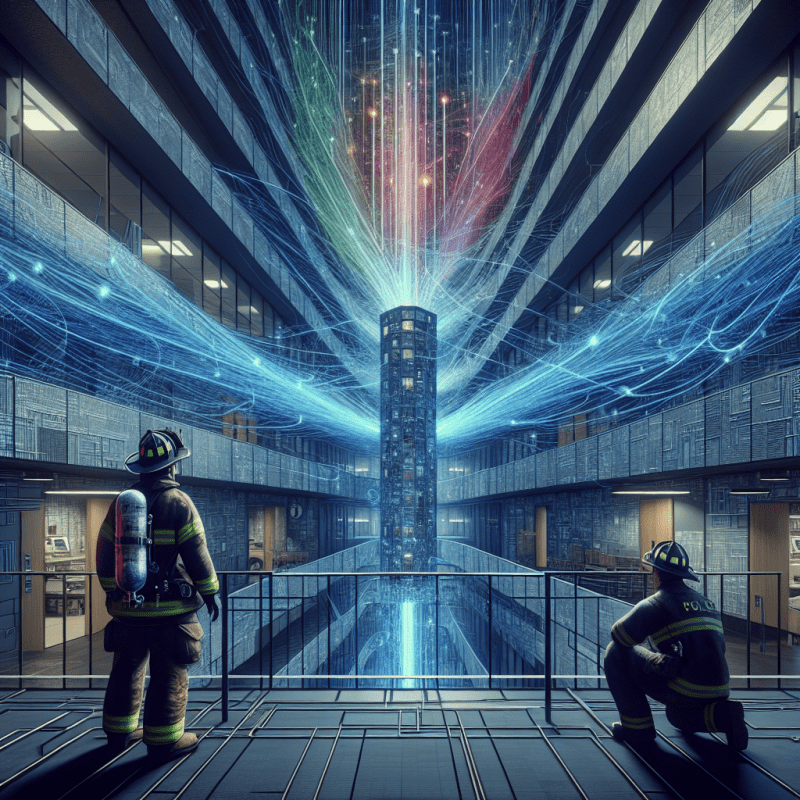
The sound of sirens approaching means help is on the way. When firefighters, police officers, or paramedics arrive at a building during an emergency, their two-way radios are their lifelines. They rely on these radios to talk to each other inside, communicate with their teams outside, and coordinate life-saving actions. But what happens when thick concrete walls, steel structures, or underground levels block those crucial radio signals? This is where the challenge of in-building radio coverage becomes a matter of life and death. Poor radio signals can create dangerous dead zones, leaving first responders isolated and unable to communicate effectively during critical moments. Ensuring clear and reliable communication inside every part of a building is not just a recommendation; in many places, it’s a mandatory safety requirement outlined in strict building codes. This post will explore why reliable in-building radio coverage is essential for emergency responder safety, the challenges buildings pose to radio signals, and how specialized technology, particularly Bi-Directional Amplifiers (BDAs) within Emergency Responder Radio Communication Systems (ERRCS), provides the vital solution to this critical safety problem. We will also delve into the technical aspects in simple terms, discuss regulatory requirements, and explain the importance of professional installation and maintenance to ensure your building meets safety standards and protects those who protect us.
Understanding the Challenge: Why Public Safety Radio Signals Fail Inside Buildings
Public safety radio signals, like those used by firefighters and police, travel through the air. Outside, in open spaces, these signals usually work well. However, buildings are complex structures that can act like giant shields, blocking or weakening these vital radio waves. Many common building materials significantly degrade radio signal strength. Think about how a basement often has poor cell service; the same issue affects first responder radios.
Concrete and steel are major culprits. Thick concrete walls, floors, and ceilings absorb or reflect radio waves. The steel reinforcement bars inside concrete amplify this problem. Large metal structures, like steel beams and pipes, also block signals effectively. Even energy-efficient windows with special coatings can reduce signal strength. The deeper inside a building responders go, or the more obstacles the signal must pass through, the weaker it gets, often to the point of being unusable. This signal degradation is the root cause of dead zones, making communication impossible exactly where it’s needed most: deep inside complex structures, stairwells, elevator shafts, parking garages, and basements.
Building layout also plays a significant role in signal blockage. High-rise buildings present vertical challenges, with signals struggling to penetrate upwards or downwards through many floors. Large, sprawling structures like hospitals, schools, or warehouses have extensive interiors with many walls and rooms, creating multiple barriers. Underground areas, such as basements and parking garages, are particularly difficult because they are completely shielded from external signals. Without a system to overcome these obstacles, emergency responders entering these areas lose contact with their command centers and colleagues, creating a dangerous communication gap. This loss of in-building radio coverage directly impacts response time and safety during emergencies.
Urban environments add another layer of complexity. Tall adjacent buildings can create ‘urban canyons’ that reflect and scatter radio signals, making the signal outside the building weaker to begin with. Interference from other radio frequencies or electronic equipment within the building can also degrade the quality of the public safety radio signal. All these factors combine to make reliable first responder communication inside modern buildings a significant technical challenge that requires a specific, engineered solution.
Recognizing this critical safety gap, authorities having jurisdiction (AHJs), such as local fire marshals, have mandated solutions. Building codes like NFPA 1225 (formerly NFPA 1221) and IFC Section 510 require buildings to have sufficient in-building radio signal strength for public safety communications. This means building owners are responsible for ensuring their structures meet these stringent requirements. Simply hoping signals will penetrate is not an option; a guaranteed, measured level of coverage is required throughout the building. This regulatory push highlights just how critical this issue is considered for public safety.
What is a Bi-Directional Amplifier (BDA)?
A Bi-Directional Amplifier (BDA) is a crucial piece of equipment designed to solve the problem of weak in-building radio coverage for emergency responders. Think of a BDA as a sophisticated signal booster specifically tuned to the frequencies used by local public safety agencies. It’s a powerful component within a larger communication system.
Here’s the basic idea of how a BDA works: First, an antenna, usually mounted on the roof of the building, captures the weak public safety radio signals coming from outside. These signals might be too weak to penetrate the building walls effectively on their own. The captured signal travels down a cable to the BDA. The BDA then amplifies this weak signal significantly. After amplification, the boosted signal is distributed throughout the building using a network of indoor antennas. This allows responders inside the building to receive clear radio transmissions from outside.
The ‘Bi-Directional’ part is key. It doesn’t just amplify signals coming into the building. It also amplifies the signals coming out of the building. When a first responder inside the building transmits on their radio, that signal might also be too weak to reach the outside world through the building’s structure. The BDA captures this weak outgoing signal from the indoor antenna network, amplifies it, and sends it back out through the rooftop antenna. This two-way amplification ensures that responders can both receive messages and send them clearly, establishing vital back-and-forth emergency communication system functionality.
BDAs are designed to be highly reliable. They typically include battery backup systems to ensure they continue operating during power outages, which are common during emergencies. They also have monitoring systems that can alert building management or maintenance personnel if there is a problem with the system, such as a power failure or a component malfunction. These features are essential because the system must be operational whenever an emergency occurs, not just when the building has power.
It’s important to understand that a BDA is not a generic cell phone booster. Public safety radio systems operate on specific, often unique, radio frequencies allocated by the FCC for emergency services. A public safety BDA must be specifically designed and tuned to operate on these exact frequencies used by the local fire department, police department, or other emergency services. Using the wrong equipment will not only fail to solve the coverage problem but could also interfere with legitimate public safety communications, which is illegal and dangerous. Therefore, selecting the correct frequency band and ensuring the BDA is properly configured is a critical step performed by expert installers. This technical precision is what makes a BDA a specialized tool for public safety radio coverage.
BDAs as the Heart of an ERRCS (Public Safety DAS)
While the BDA is a critical component, it is only one part of a complete Emergency Responder Radio Communication System (ERRCS), also frequently referred to as a Public Safety Distributed Antenna System (DAS). An ERRCS is the full infrastructure installed within a building to provide guaranteed, reliable two-way radio communication for first responders. The BDA acts as the ‘engine’ or ‘amplifier’ at the heart of this system, but the DAS provides the ‘network’ that distributes the signal throughout the building.
An ERRCS typically consists of several key components working together. It starts with a Donor Antenna, usually located on the building’s roof or an elevated point, which captures the existing outdoor public safety radio signals. This antenna is connected by specialized, low-loss cable to the BDA inside the building. The BDA amplifies the signal in both directions (bi-directional). The amplified signal is then fed into a network of cables, splitters, and indoor antennas located strategically throughout the building. These indoor antennas broadcast the amplified signal into the interior spaces, including notoriously difficult areas like basements, stairwells, and core areas. This network of indoor antennas is the ‘Distributed Antenna System’ or DAS part of the ERRCS.
The system also includes a dedicated power supply, often with a battery backup capable of powering the system for a minimum duration (usually 12 to 24 hours, depending on local codes) in case of a power outage. This ensures the system remains operational when it is needed most. A monitoring system is also a standard part of an ERRCS. This system continuously checks the status of the BDA, power supply, and other components. If any part of the system fails, it sends an alert to a designated monitoring station (like a fire alarm panel) and potentially to building management or a service provider. This allows for prompt repair and ensures the system is always ready.
Building codes like NFPA 1225 and IFC Section 510 don’t just require a BDA; they require a fully functional ERRCS that meets specific performance criteria. This includes minimum signal strength levels in all critical areas of the building, system reliability requirements, power backup duration, and monitoring capabilities. Simply installing a BDA without a properly designed and installed DAS network, power backup, and monitoring will not meet code requirements and will likely not provide the necessary coverage. A complete Public Safety DAS is the engineered solution to ensure full building radio frequency (RF) coverage for emergency use.
Deploying an effective ERRCS is not a do-it-yourself project. It requires specialized knowledge of radio frequency propagation, building construction, system design, equipment selection, and regulatory codes. Professional expertise is essential to conduct a proper RF survey, design a system tailored to the building’s specific layout and materials, select compatible and code-approved equipment (from manufacturers like Nextivity, Fiplex, Comba, ADRF, Westell), install it correctly, and perform the necessary testing to verify compliance. A well-designed and professionally installed ERRCS is the robust solution that guarantees firefighter communication and other first responder radios work flawlessly inside any structure, no matter how challenging.
The Critical Importance of Building Code Compliance
Ensuring that emergency responders can communicate reliably inside buildings isn’t just a best practice; in most jurisdictions across the United States, it’s a legal requirement. Building codes, most notably those from the National Fire Protection Association (NFPA) and the International Code Council (ICC), specifically mandate adequate in-building radio coverage for public safety frequencies. Adhering to these codes is not optional; it’s a matter of occupant safety and compliance with the law.
Key codes that address this issue include NFPA 1225, ‘Standard for Emergency Services Communications’ (which recently consolidated requirements previously in NFPA 1221), and Section 510 of the International Fire Code (IFC). These codes specify the minimum signal strength levels that must be available throughout the building, particularly in critical areas like stairwells, elevator lobbies, basements, and other enclosed spaces. They also detail requirements for the system’s components, such as battery backup duration, monitoring capabilities, and even the fire rating of the cables used.
The codes typically require a specific minimum downlink signal strength (signal coming into the building from outside) and uplink signal strength (signal going out from inside the building) in a certain percentage of the building’s area, often 95% or 99% coverage in critical areas. This level of coverage must be verified through rigorous testing procedures outlined in the codes, such as grid testing where signal strength is measured on a precise grid pattern across each floor.
Failing to meet these code requirements can have serious consequences. For building owners and developers, it can mean delays in obtaining occupancy permits, costly retrofits, potential fines, and increased liability in the event of an emergency where communication failure contributes to harm. For emergency responders, it means facing dangerous situations without reliable communication, putting their lives and the lives of occupants at greater risk. AHJs, such as the local fire department or building department, are responsible for enforcing these codes. They typically require documentation of a thorough RF survey, system design plans, permits, and successful inspection and testing results before approving occupancy.
Navigating these complex codes and ensuring full compliance requires expertise. The requirements can vary slightly depending on the specific adopted version of the code and any local amendments. A professional who specializes in ERRCS compliance understands these nuances, can interpret the specific requirements for a given building and jurisdiction, and can design, install, and test a system that definitively meets those standards. Partnering with experts ensures that your building not only provides essential public safety communication but also satisfies all legal and safety regulations, protecting everyone involved.
The Professional Process: From RF Survey to System Commissioning
Implementing a compliant and effective Emergency Responder Radio Communication System (ERRCS) is a multi-step process that requires specialized knowledge and careful execution. It begins long before any equipment is installed and concludes with rigorous testing to ensure the system performs as required by code.
The first critical step is a comprehensive RF (Radio Frequency) survey. This survey is like taking an X-ray of the building’s radio environment. A trained technician uses specialized test equipment to measure the strength of the existing public safety radio signals throughout the building, including all floors, stairwells, basements, and other enclosed areas. This survey identifies areas with weak or non-existent signal – the ‘dead zones’. The survey also helps identify the specific frequencies used by the local public safety agencies and any potential sources of interference. The data gathered during the RF survey is essential for understanding the scope of the problem and forms the basis for designing the right solution.
Following the RF survey, the next step is system design. Using sophisticated software like iBwave, engineers design the ERRCS layout. This involves determining the optimal placement for the donor antenna, the BDA, cables, splitters, and the network of indoor antennas. The design must account for the building’s construction materials, layout, and the signal strength requirements identified in the RF survey and dictated by local codes (like NFPA 1225 and IFC Section 510). The goal is to ensure the amplified signal is distributed evenly and strongly enough to meet the minimum required signal levels in all designated areas of the building. The design phase also includes selecting the appropriate equipment, ensuring compatibility with the local public safety radio system frequencies, and specifying power supply and monitoring requirements.
Once the design is approved (often by the AHJ), the installation phase begins. This involves carefully running cables, mounting the donor antenna, installing the BDA unit in a secure, environmentally controlled location (often the fire control room), and strategically placing the indoor antennas throughout the building according to the design specifications. Installation must adhere to all relevant electrical and building codes, and often involves working closely with other trades. Proper cable management, grounding, and sealing are crucial for system reliability and safety.
After installation is complete, the system must undergo rigorous testing and commissioning. This is where the system’s performance is verified against the code requirements. A key part of this is grid testing, where signal strength measurements are taken on a predefined grid pattern (e.g., 20 points per floor, or 40 points in critical areas like stairwells) across every floor of the building. Signal strength readings are recorded at each test point to demonstrate that the required signal level (e.g., -95 dBm downlink, -95 dBm uplink) is met in the specified percentage of the area. Alarm and monitoring functions are tested, and the battery backup system is verified to ensure it provides power for the required duration. A formal report documenting all test results is prepared and submitted to the AHJ for approval. Only after the system passes these tests is it considered commissioned and compliant. This meticulous process, handled by experienced professionals, ensures the ERRCS is truly effective and code-compliant.
The Necessity of Ongoing Testing and Maintenance
Installing a compliant Emergency Responder Radio Communication System (ERRCS) is a significant step towards building safety and code adherence, but it’s not a ‘set it and forget it’ solution. Like any complex electronic system, an ERRCS requires ongoing testing and maintenance to ensure it remains fully operational and compliant over time. Building codes, including NFPA 1225 and IFC Section 510, explicitly mandate periodic inspections and testing of these systems.
Environmental factors, building modifications, or even nearby construction can impact the performance of an ERRCS. A rooftop antenna could be damaged by weather or obstructed by new equipment installed on the roof. Cables could be damaged during other renovation work inside the building. The BDA unit itself, or its power supply components, could experience technical issues over time. Any of these problems could degrade the system’s performance, potentially creating new dead zones or reducing signal strength below required levels, leaving responders vulnerable during an emergency. This is why routine checks are so important.
Code requirements typically specify annual inspections and testing. This annual testing often includes a walk-through of the building to visually inspect components, a check of the power supply and battery backup system, and a sample of grid testing to ensure signal strength remains adequate in key areas. More comprehensive testing, similar to the initial commissioning tests, might be required less frequently, perhaps every five years, depending on the specific adopted code version and local regulations. Regular maintenance goes hand-in-hand with testing. This involves preventative checks, cleaning components, ensuring connections are secure, and addressing any minor issues before they become major failures. Keeping detailed records of all inspections, testing, and maintenance activities is also crucial for demonstrating ongoing compliance to the AHJ.
AHJs require proof that the ERRCS is being maintained and tested according to code. Failure to perform scheduled maintenance and testing can result in non-compliance citations, fines, and potentially necessitate a full system re-commissioning. More importantly, a poorly maintained system might fail when it’s needed most, with potentially tragic consequences for both responders and occupants. Choosing a qualified service provider for ongoing maintenance is just as critical as choosing the right installer. They have the necessary equipment, expertise, and understanding of code requirements to perform the required tests accurately and maintain the system effectively. Proactive maintenance ensures the ERRCS remains a reliable lifeline for public safety communications within your building, guaranteeing that in-building radio coverage is always available at the critical moment.
Choosing the Right Partner for Your ERRCS Needs
Given the complexity, regulatory requirements, and critical safety function of Emergency Responder Radio Communication Systems (ERRCS), partnering with an experienced and reputable provider is essential. This is not a project for a general electrician or IT contractor; it requires specialized expertise in radio frequency technology, system design, installation best practices, and, crucially, a deep understanding of the applicable building and fire codes like NFPA 1225 and IFC Section 510.
The right partner begins with understanding your building’s specific needs. They will conduct a thorough initial RF survey to accurately map signal coverage and identify problem areas. They possess the engineering capability to design a custom ERRCS solution tailored to your building’s unique structure, materials, and the specific frequencies used by your local first responders. This design phase is critical and often involves using advanced software like iBwave to predict system performance accurately. They will also help you navigate the often-complex process of obtaining permits and getting system design approval from the local Authority Having Jurisdiction (AHJ).
Expertise in equipment selection is also vital. A professional provider knows which manufacturers offer reliable, code-compliant BDA and DAS components (such as equipment from trusted names like Nextivity, Fiplex, Comba, ADRF, and Westell). They understand the technical specifications required to ensure the system works correctly with local public safety radio systems and meets performance requirements. Proper installation requires certified technicians who understand the nuances of deploying these systems, including ensuring proper cable runs, antenna placement, grounding, and integration with the building’s power and fire alarm systems.
The commitment of a reliable partner extends beyond installation. They provide the necessary rigorous testing and commissioning services, including detailed grid testing and reporting, to prove to the AHJ that the system meets all code requirements. Furthermore, they offer essential ongoing maintenance and inspection services. Regular checks and testing by the same expert team that installed the system ensure it remains in optimal working order and stays compliant with evolving regulations. This proactive approach prevents potential failures and ensures that the critical lifeline of first responder communication is always available inside your building.
Ultimately, choosing a partner with a proven track record in deploying, testing, and maintaining code-compliant ERRCS solutions provides peace of mind. You gain confidence knowing that your building is safer for occupants and emergency personnel, and that you are fully compliant with stringent safety codes. A dedicated ERRCS provider understands the high stakes involved in public safety radio system reliability and is equipped to deliver solutions that perform flawlessly when lives are on the line. They are not just installing equipment; they are installing and maintaining a critical safety infrastructure.
Frequently Asked Questions (FAQs) About BDAs and ERRCS
What is the difference between a BDA and an ERRCS?
A Bi-Directional Amplifier (BDA) is a specific piece of equipment that amplifies radio signals in both directions. An Emergency Responder Radio Communication System (ERRCS), also known as a Public Safety DAS, is the complete system installed in a building to ensure reliable first responder radio coverage. The ERRCS includes the BDA, antennas (donor and interior), cables, power supply, battery backup, and monitoring system. The BDA is a key component, but the ERRCS is the full infrastructure needed for code compliance and reliable communication.
Are BDAs and ERRCS required by law?
Yes, in most jurisdictions across the United States, building codes such as NFPA 1225 and IFC Section 510 require buildings (especially new construction or those undergoing significant renovations) to have adequate in-building radio coverage for emergency responders. This typically necessitates the installation of a code-compliant ERRCS incorporating a BDA. These requirements are enforced by local Authorities Having Jurisdiction (AHJs) like fire marshals.
How long does it take to install an ERRCS?
The timeline for installing an ERRCS varies significantly based on the size and complexity of the building. The process involves an initial RF survey, system design and permitting (which can take weeks or months depending on the AHJ), equipment procurement, installation, and final testing and commissioning. Installation alone can take several days to several weeks. The entire process, from survey to final AHJ approval, typically ranges from a few months to over a year for large or complex projects.
What kind of maintenance does an ERRCS need?
ERRCS systems require regular maintenance and testing as mandated by building codes. This typically includes annual inspections and performance testing (often involving partial grid testing) and more comprehensive testing (like full grid testing) every five years. Maintenance involves checking the BDA, power supply, battery backup, antennas, and cabling, and ensuring the monitoring system is functional. Proper maintenance ensures the system remains reliable and compliant over time.
Can a standard cell phone booster be used for public safety radio coverage?
No, standard cell phone boosters operate on different frequencies and are not designed or approved for public safety radio systems. Public safety BDAs and ERRCS systems are specifically designed to work on the frequencies allocated for police, fire, and other emergency services and must meet stringent performance and reliability standards required by building codes. Using a non-approved device can cause interference with critical public safety communications and is illegal.
Conclusion: Ensuring the Lifeline of Communication
The ability of emergency responders to communicate clearly and reliably inside buildings is not a luxury; it is a fundamental necessity for their safety and the safety of everyone inside. Modern buildings, while offering many benefits, pose significant challenges to radio signals, creating dangerous dead zones where communication fails. Bi-Directional Amplifiers (BDAs) and the comprehensive Emergency Responder Radio Communication Systems (ERRCS) they are part of provide the essential solution to this problem by extending and amplifying these critical signals throughout the structure. Implementing a code-compliant ERRCS is a complex endeavor involving detailed RF surveys, expert system design using tools like iBwave, careful installation, rigorous testing including grid testing, and ongoing maintenance. Adhering to standards like NFPA 1225 and IFC Section 510 is not just about meeting legal requirements; it’s about providing the critical lifeline that ensures firefighters, police, and paramedics can coordinate effectively during the most challenging situations. Partnering with an experienced provider who understands the nuances of public safety DAS and possesses the expertise to navigate the entire process, from initial assessment to long-term maintenance, is crucial. By investing in a professional ERRCS solution, building owners and managers ensure their facilities are safer, code-compliant, and fully equipped to support emergency operations, guaranteeing that help is never out of reach inside their walls. To learn more about ensuring reliable in-building radio coverage or to assess your building’s specific needs, contact an expert today to discuss your ERRCS options and take the necessary steps to protect those who serve us.
Ensure Your Building's Safety - Contact Lexico Today