
- The Importance of Adhering to Fire Safety Regulations in DAS Installations
- Understanding Fire Ratings for Building Materials and In-Building Cellular DAS Components
- Best Practices for Fireproofing Your In-Building Cellular DAS
- Fire Safety Regulations Demand Regular Inspections and Prompt Remediation
- Frequently Asked Questions About Fireproofing and DAS
Modern buildings are marvels of engineering, designed with robust materials like concrete, steel, and energy-efficient glass. While these materials make structures incredibly strong and eco-friendly, they also act as massive barriers to wireless signals. This creates a severe problem for first responders who rely on clear radio communication during an emergency. To solve this, property owners install specialized equipment to boost radio signals inside the building.
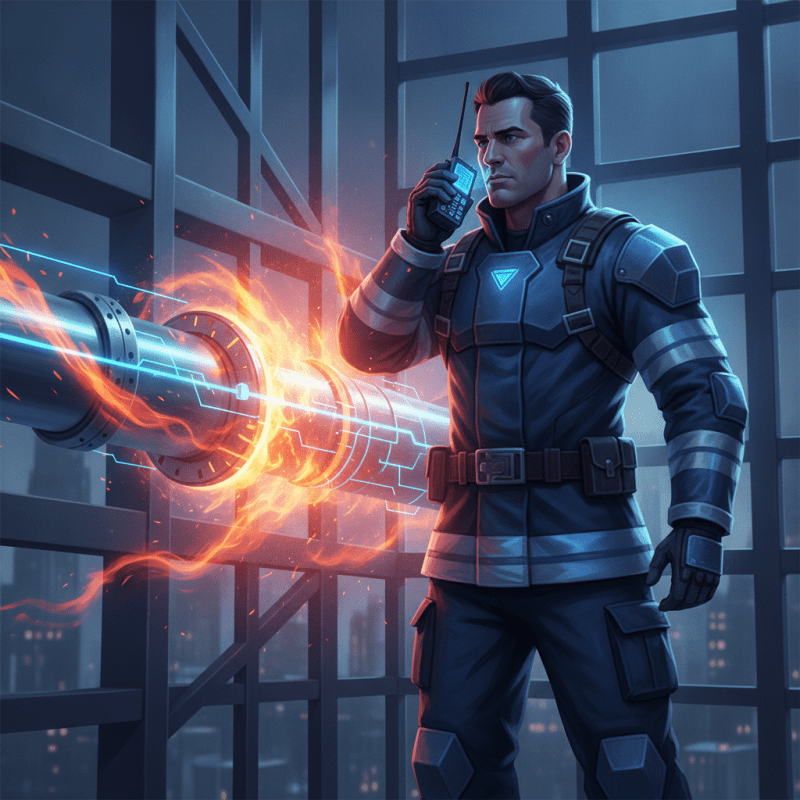
However, simply installing these communication networks is not enough. If a fire breaks out, the intense heat and flames can quickly destroy standard electronic equipment and cables. This is where specialized fireproofing becomes absolutely vital to public safety. An Emergency Responder Radio Communication System, often referred to as an ERRCS, must be designed to survive the harshest conditions.
If the system fails during a fire, firefighters and police officers lose their lifeline to the outside world.
This article will explore the critical intersection of wireless technology and building safety. We will discuss the vital importance of protecting these networks from extreme heat and structural damage. You will learn about the strict codes that govern these systems and the best practices for keeping them safe. By understanding these concepts, building owners can ensure their properties are fully compliant and ready for any emergency.
The Importance of Adhering to Fire Safety Regulations in DAS Installations
When deploying an In-Building Cellular DAS or an ERRCS, following strict building codes is not just a suggestion. It is a strict legal requirement enforced by local authorities. These rules are created by organizations like the National Fire Protection Association, commonly known as the NFPA. The International Fire Code, or IFC, also outlines specific rules for how these systems must operate during an emergency.
One of the most important concepts in these rules is known as pathway survivability. Pathway survivability means that the cables and equipment must continue to work even when surrounded by a raging fire. First responders need time to enter the building, locate the danger, and rescue occupants. If the communication system burns up in the first five minutes, it is completely useless to the rescue teams.
Adhering to Fire Safety Regulations ensures that the system provides a reliable communication lifeline for a specific duration, typically two hours. This two-hour window is often the critical timeframe needed for emergency teams to control a blaze. Achieving this level of protection requires specialized planning long before the first cable is installed. System designers must carefully evaluate the building layout to determine the safest routes for wiring.
Failing to meet these strict standards can result in severe consequences for building owners. Local fire marshals, acting as the Authority Having Jurisdiction, thoroughly inspect these systems before granting an occupancy permit. If the network does not meet the required survivability standards, the building may not be allowed to open. Furthermore, non-compliance puts lives at risk and exposes property owners to massive legal liabilities.
Understanding Fire Ratings for Building Materials and In-Building Cellular DAS Components
To build a survivable communication network, you must first understand how building materials are tested and rated. A fire rating is a measurement of how long a material can withstand a standard fire resistance test. These tests are conducted by independent safety organizations, such as Underwriters Laboratories, or UL. When a component receives a two-hour rating, it means it successfully resisted structural failure and heat transfer for that duration.
For an In-Building Cellular DAS, the most critical components requiring protection are the Bi-Directional Amplifiers, or BDAs, and the fiber optic and coaxial cables. The BDA is the brain of the system, actively pulling in weak radio signals from outside and pushing them throughout the building. Because this equipment is full of sensitive electronics, it must be housed inside highly durable, fire-rated enclosures. These enclosures are designed to block extreme heat, smoke, and even the water from fire sprinklers.
Building owners must also consider the fire ratings of the structure itself when planning an installation. A dedicated electrical room might already have walls built with fire-rated drywall that offers a two-hour protective barrier. If the main amplifier equipment is placed inside this highly protected room, the equipment itself may not need an additional specialized fire enclosure. However, the moment the cables leave that protected room, they become vulnerable to the surrounding environment.
Understanding the National Electrical Manufacturers Association, or NEMA, ratings is also crucial for equipment selection. A NEMA 4 enclosure, for instance, provides excellent protection against falling dirt, rain, and hose-directed water. While NEMA ratings focus more on environmental protection than extreme heat, they are a critical part of the overall survivability strategy. The enclosures must keep out the heavy water pressure from firefighter hoses just as effectively as they block smoke.
Best Practices for Fireproofing Your In-Building Cellular DAS
Building a robust and compliant emergency communication network requires a multi-layered approach to protection. You cannot rely on a single method to keep the system running during a catastrophic event. Instead, professional installers use a combination of specialized hardware, strategic routing, and advanced materials. This layered strategy ensures that if one protective measure fails, another is there to back it up.
Implementing these best practices requires a deep understanding of both radio frequency engineering and structural safety. The technicians installing the equipment must be highly trained in handling specialized fire-resistant materials. They must also work closely with other construction trades to ensure the system integrates seamlessly with the building infrastructure. Below are the most critical practices used to protect these life-saving networks.
Utilizing Fire-Rated Enclosures for Amplification Equipment
As previously mentioned, the core amplifiers and battery backup units must be heavily protected from heat and water. In many cases, these units are installed in dedicated fire-rated enclosures. These heavy-duty cabinets are lined with specialized thermal insulation that prevents the internal temperature from rising too quickly. Keeping the internal temperature stable is critical because excessive heat will instantly melt circuit boards and destroy the amplifier.
Battery backup systems require even more careful consideration when it comes to enclosure selection. ERRCS networks must have a dedicated power source that can run the system for at least 12 to 24 hours if the main building power fails. Batteries can generate their own heat and hazardous gases, meaning their enclosures must be properly ventilated while still maintaining a fire barrier. Selecting the right cabinet ensures the batteries remain safe, cool, and fully operational when the grid goes down.
Selecting Fire-Retardant Cable Jackets
Cables act as the nervous system of an In-Building Cellular DAS, carrying the radio signals to antennas scattered throughout the facility. Because these cables travel through hallways, elevator shafts, and ceilings, they are highly exposed to potential fire hazards. Choosing the correct type of cable jacket is one of the most important decisions a system designer makes. Standard plastic cable jackets can melt quickly, release toxic smoke, and actually help spread flames to other areas.
To prevent this, installers use cables with specialized fire-retardant jackets. When installing cables in spaces used for environmental air circulation, known as plenum spaces, plenum-rated cables are legally required. These cables are coated with materials like Teflon, which have a much higher melting point and produce very little smoke when burned. Keeping toxic smoke out of the building ventilation system is just as important as keeping the radio signals active.
Implementing Proper Cable Management and Routing
Even the most expensive fire-retardant cable can fail if it is installed in a hazardous location. Proper cable management involves routing the wiring through the safest possible pathways within the building structure. System designers will often use two-hour fire-rated stairwells as vertical pathways to move cables between floors safely. By leveraging the building existing safety features, the cables are granted a massive layer of natural protection.
When natural fire-rated pathways are not available, installers must create their own protective barriers. This is often achieved by running the coaxial and fiber optic cables inside thick metal conduits. In highly sensitive scenarios, the metal conduit itself is wrapped in specialized fire-resistant blankets. Another common method is to use Circuit Integrity cable, often called CI cable, which is specially manufactured to survive direct flames without additional conduit.
Installing Effective Penetration Seals and Firestops
During the installation of any comprehensive wireless system, technicians will inevitably need to drill holes through walls and floors. Building structures are divided into distinct fire zones designed to contain a blaze in a single area. When a hole is drilled through a fire-rated wall to pass a cable, that protective barrier is immediately broken. If left unsealed, flames and toxic smoke will rapidly travel through that tiny hole into the next room.
To restore the integrity of the barrier, technicians must use highly specialized penetration seals, commonly known as firestops. These include fire-rated caulks, putty pads, and expanding foam specifically designed for extreme temperatures. Many of these firestop materials are intumescent, meaning they rapidly expand when exposed to high heat. This incredible expanding action tightly chokes off the hole around the melting cable, completely blocking the path of the fire.
Fire Safety Regulations Demand Regular Inspections and Prompt Remediation
An ERRCS is not a system you can simply install and then forget about for the next decade. Building environments change, components age, and structural shifts can degrade the initial fireproofing measures. Because this technology is strictly tied to life safety, continuous monitoring and maintenance are mandated by law. Fire Safety Regulations require building owners to have these systems thoroughly inspected by certified professionals on a regular basis.
Annual testing is a standard requirement for almost all public safety radio networks. During an annual inspection, technicians perform comprehensive signal benchmark testing to ensure the coverage remains strong throughout the facility. However, they also conduct a rigorous visual inspection of the physical components and their protective barriers. They check the battery health, verify the integrity of the NEMA enclosures, and inspect the cable runs for any signs of physical damage.
Inspecting the firestop seals is one of the most critical parts of this annual maintenance routine. Over the course of a year, other contractors, such as electricians or plumbers, might work in the same ceiling spaces. It is highly common for these secondary workers to accidentally damage or remove a firestop seal when moving their own wires. If an inspector finds a compromised penetration seal, it must be documented immediately.
Prompt remediation of any discovered issues is absolutely necessary to maintain compliance and safety. If a firestop is broken, a fire-rated door to an equipment room is damaged, or a backup battery fails a load test, the building owner must take swift action. Delaying these repairs leaves the communication network vulnerable and puts the building in violation of fire codes. Partnering with a dedicated maintenance provider ensures that these critical repairs are handled quickly and correctly.
Frequently Asked Questions About Fireproofing and DAS
What does pathway survivability mean for a public safety communication network?
Pathway survivability refers to the ability of the system wiring and components to continue functioning during a severe fire. This ensures that the radio signals between first responders remain active even as the building structure is compromised by heat and flames. It is typically achieved by routing cables through fire-rated stairwells, using specialized fire-wrapped conduit, or installing heavily protected enclosures.
Why do I need a two-hour fire rating for my ERRCS equipment?
A two-hour fire rating is the standard mandated by codes like NFPA 1225 and the International Fire Code. Two hours provides emergency teams with enough time to arrive at the scene, set up a command center, and conduct complex search and rescue operations inside the building. If the system fails before this time, firefighters can become disoriented and completely cut off from their commanding officers.
Who enforces fire safety regulations for in-building wireless systems?
These regulations are strictly enforced by the local Authority Having Jurisdiction, which is typically the city or county fire marshal. The fire marshal reviews the initial system design, oversees the final testing, and dictates the exact code requirements for that specific region. Without the direct approval of the local fire marshal, a building will not be granted its final certificate of occupancy.
What is the difference between plenum and riser cables in a DAS installation?
Plenum cables are designed for use in the open spaces above dropped ceilings or under raised floors where environmental air circulates. They have highly specialized jackets that produce very little toxic smoke if exposed to fire. Riser cables are used in vertical shafts that run between floors, and while they are fire-resistant, they do not have the same strict low-smoke requirements as plenum cables.
How do intumescent firestops work to protect a building?
Intumescent materials contain special chemicals that react dramatically when exposed to extreme heat. When a fire breaks out, the heat causes the firestop material to expand massively, sometimes up to twenty times its original size. This rapid swelling quickly and forcefully fills any gaps or holes in the wall, creating a dense, solid barrier that prevents fire and smoke from passing through.
An Emergency Responder Radio Communication System is ultimately a lifeline for those who risk their lives to protect our communities. Ensuring that these networks are properly protected from fire is a complex but entirely necessary undertaking. From selecting the right fire-rated enclosures to diligently applying intumescent firestops, every single detail matters. If you are navigating the complexities of building codes and need a highly reliable, fully compliant public safety DAS, Lexico is here to help. Our team of specialized engineers and technicians provides expert design, installation, testing, and maintenance to guarantee your system is always ready for the worst-case scenario. Reach out to us today to request a comprehensive consultation and secure the safety of your property.
Ensure Your Building's Safety - Contact Lexico Today