
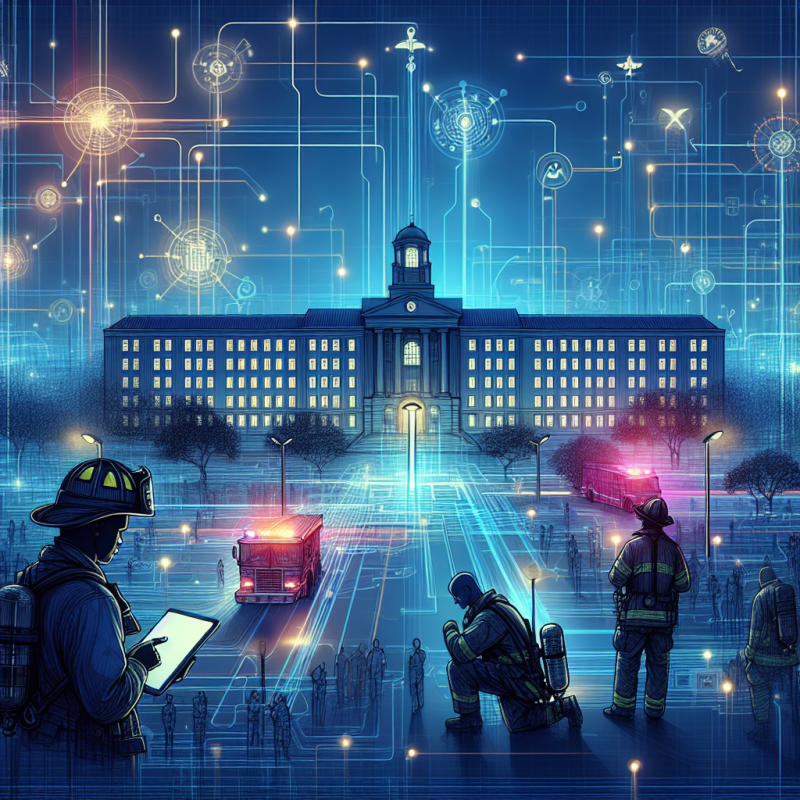
- Enhancing College Campus Wireless Connectivity with a Distributed Antenna System
- The Wireless Connectivity Challenge on College Campuses
- Distributed Antenna System: A Scalable Solution for Campus Wireless
- Ensuring Emergency Responder Radio Communication Coverage and Code Compliance
- Advanced DAS Infrastructure: Beyond RF Cables
- Supporting Supplementary Networks with Advanced DAS
- Your Partner in Campus Connectivity and Safety
Enhancing College Campus Wireless Connectivity with a Distributed Antenna System
College campuses are vibrant hubs of learning, innovation, and community. From historic lecture halls to modern student residences and sprawling athletic facilities, these environments present unique challenges when it comes to reliable mobile connectivity. Students, faculty, and staff depend on their devices for everything: staying connected, accessing online resources, and ensuring safety. But what happens when the signal drops?
Poor indoor cellular service can hinder academic progress, reduce productivity, and, most critically, endanger lives during an emergency. This is where a distributed antenna system (DAS) becomes an essential part of modern campus wireless solutions. These powerful systems are designed to bring strong, consistent cellular and radio signals deep inside buildings, ensuring everyone has the reliable connection they need, including critical emergency responder radio communication coverage.
Lexico specializes in designing, installing, and maintaining advanced wireless systems that solve these complex connectivity challenges for colleges and universities. We help campuses ensure seamless communication and meet crucial safety regulations.
The Wireless Connectivity Challenge on College Campuses
Providing consistent and reliable cellular and radio coverage across a college campus is a significant hurdle. Campuses are often made up of a wide variety of buildings. You might have century-old stone buildings right next to brand-new steel and glass structures. This mix of building materials and architectural styles can block or weaken wireless signals, creating frustrating dead zones.
Imagine trying to attend a virtual lecture in a lecture hall where your phone keeps losing signal, or students struggling to submit an assignment because the Wi-Fi is spotty in their dorm room. These are common problems when campus wireless solutions are not robust enough.
Old buildings, with their thick walls and unique construction, are notorious for blocking cellular signals. Modern buildings, while impressive, often use materials like concrete, steel, and energy-efficient glass that also act as barriers. This means that even if there’s a strong signal outside, it can disappear once you step indoors. This problem isn’t just an inconvenience; it impacts daily operations, safety, and the overall student experience.
Beyond just cellular signal, public safety radio signals, used by firefighters and police, also struggle to penetrate these diverse structures. This is a critical issue that affects the ability of emergency responders to communicate effectively when every second counts. Without strong emergency responder radio communication coverage, lives can be at risk during a crisis.
When considering comprehensive campus wireless solutions, it’s important to look at how different areas of the campus are affected. This includes:
- Academic Buildings: Classrooms, lecture halls, libraries, and research labs need strong signals for online learning, research, and communication.
- Residential Halls: Students rely on their mobile devices for social connections, entertainment, and safety in their dorms.
- Athletic Facilities: Gyms, arenas, and stadiums often have large open spaces or underground areas where signals can be weak, especially during events with many users.
- Underground Areas: Basements, tunnels, and parking garages are common dead zones for all wireless signals.
- Outdoor Spaces: Even outdoor areas on a sprawling campus might have weak spots between buildings or in certain landscapes.
Solving these diverse connectivity problems requires a strategic approach and specialized technology. A distributed antenna system offers a powerful way to overcome these challenges and ensure seamless campus wireless solutions for everyone.
Distributed Antenna System: A Scalable Solution for Campus Wireless
A distributed antenna system, often called DAS, is a network of small antennas that are strategically placed throughout a building or campus to improve wireless connectivity. Think of it like a series of mini cell towers placed indoors, working together to boost signals and provide seamless coverage. This technology is a game-changer for campus wireless solutions, especially in large or uniquely shaped areas where traditional cellular signals struggle to reach.
Here’s how a distributed antenna system works: A strong cellular or radio signal is captured from outside the building, often from an existing cell tower. This signal is then sent to a central unit. From there, it’s distributed through a network of cables (either fiber optic or coaxial) to small, unobtrusive antennas installed in various locations throughout the campus buildings. These antennas then broadcast the strong signal, filling in dead zones and ensuring clear reception.
One of the key benefits of a DAS is its scalability. This means the system can be designed to fit the specific needs of a campus, whether it’s a single large building or an entire network of buildings. As the campus grows or needs change, more antennas can be added to expand coverage. This makes a DAS a future-proof investment in campus wireless solutions.
A DAS also offers:
- Consistent Signal Strength: No more dropped calls or slow data speeds in hallways, classrooms, or dorm rooms. A DAS provides a reliable signal everywhere.
- Improved Call Quality and Data Speeds: Stronger signals mean clearer calls and faster internet access, enhancing productivity and the user experience.
- Support for Multiple Carriers: A single distributed antenna system can support signals from all major cellular carriers (AT&T, Verizon, T-Mobile, etc.) at the same time. This is known as a “neutral host DAS,” ensuring that all students, faculty, and visitors, regardless of their mobile provider, have excellent service. This is a critical aspect of effective campus wireless solutions.
- Enhanced Capacity: During large events, like graduation ceremonies or sporting events, many people are using their phones at once. A DAS can handle this increased demand, preventing network slowdowns and ensuring everyone stays connected.
- Future-Proofing: As wireless technologies evolve (e.g., 5G), a well-designed DAS can often be upgraded or adapted to support newer technologies, protecting the campus’s investment.
Implementing a distributed antenna system is not just about convenience; it’s about creating a safe and efficient environment. It directly contributes to the overall effectiveness of campus wireless solutions by providing a reliable backbone for all mobile communications, including critical emergency responder radio communication coverage.
Ensuring Emergency Responder Radio Communication Coverage and Code Compliance
While keeping students and staff connected is important, ensuring reliable emergency responder radio communication coverage inside buildings is absolutely non-negotiable. This is a matter of life and death. Firefighters, police officers, and other first responders rely on their two-way radios to communicate with each other and with dispatch, especially when operating inside large or complex structures like those found on college campuses.
Imagine a fire breaks out in a science lab, or a medical emergency occurs in a student dormitory. First responders need to be able to talk to their teams and call for backup without interruption. If their radios stop working inside a building due to poor signal penetration, it can lead to dangerous delays, confusion, and put their lives, as well as the lives of those they are trying to save, at extreme risk. This is why emergency responder radio communication coverage, often provided by a Public Safety DAS or ERRCS (Emergency Responder Radio Communication System), is mandated by law.
Building codes and fire safety ordinances, specifically standards from the National Fire Protection Association (NFPA) and the International Fire Code (IFC), require adequate indoor radio coverage for emergency personnel. These codes apply to new construction and, in many cases, to existing buildings undergoing significant renovations. The Authority Having Jurisdiction (AHJ), typically the local fire marshal’s office, is responsible for enforcing these critical regulations.
Complying with these regulations involves several key steps:
- Initial Signal Testing: Before any system is designed, a thorough radio frequency (RF) signal test is conducted throughout the building. This helps identify areas where coverage is weak or nonexistent.
- System Design: Based on the signal test results, a specialized distributed antenna system (DAS) is designed specifically for emergency responder radio communication coverage. This design ensures that every part of the building, including stairwells, basements, and critical egress paths, receives adequate signal strength.
- Installation: The ERRCS is installed by certified technicians, ensuring all components meet strict performance and safety standards. This includes the Bi-Directional Amplifier (BDA), the main unit that boosts the radio signals, and the network of antennas.
- Final Testing and Certification: Once installed, the system undergoes rigorous testing to verify that it meets or exceeds the required coverage levels. This testing is often performed in the presence of the AHJ. Once approved, the system receives certification, which is usually required for occupancy permits.
- Ongoing Maintenance: Like any critical safety system, ERRCS requires regular inspection and testing to ensure it remains fully operational. This is typically an annual requirement.
Failure to comply with these codes can lead to significant consequences, including:
- Delayed or denied occupancy permits for new or renovated buildings.
- Steep fines and legal penalties.
- Most importantly, compromised safety for both occupants and emergency responders during a crisis.
Lexico understands the complexities of these regulations and the vital importance of emergency responder radio communication coverage. We work closely with campus authorities and local fire departments to ensure that all our distributed antenna system installations meet or exceed public safety code requirements, providing peace of mind and, most importantly, saving lives.
Advanced DAS Infrastructure: Beyond RF Cables
The heart of any distributed antenna system lies in its infrastructure – the network of cables and components that carry and distribute wireless signals. Traditionally, DAS systems have primarily used two types of cables: coaxial (RF) cables and fiber-optic cables. However, advanced DAS solutions are now integrating with existing IT structured cabling, offering even more benefits for comprehensive campus wireless solutions.
Traditional Cabling Methods:
- Coaxial (RF) Cables: These are similar to the cables used for cable TV. They are excellent for carrying radio frequency (RF) signals over shorter distances. In a DAS, coaxial cables connect the various antennas to a central signal source or to fiber-optic converters. They are robust and reliable for distributing amplified signals to individual antenna remotes on each floor or within specific areas.
- Fiber-Optic Cables: These cables use light pulses to transmit data and signals. They are incredibly efficient for carrying signals over very long distances with minimal signal loss. In a distributed antenna system, fiber-optic cables are often used to connect the central equipment room to remote hubs or amplifiers located in different buildings or floors across a large campus. This allows a single central system to serve a wide area, making it ideal for campus wireless solutions spread across many buildings.
Advanced DAS Solutions: Leveraging IT Structured Cabling
Modern distributed antenna system designs are evolving to take advantage of a campus’s existing IT structured cabling infrastructure, primarily Ethernet cables. This is a significant advancement for campus wireless solutions. Instead of running separate sets of coaxial or fiber cables to every antenna, digital DAS solutions can use the same Ethernet cables that power computers, Wi-Fi access points, and other network devices.
How it works: In a digital DAS, the radio frequency signals are converted into a digital format. This digital signal can then be sent over standard Ethernet (Category 5e, 6, or higher) cables, just like any other network data. At the antenna locations, small “remote units” convert the digital signal back into RF signals, which are then broadcast by the antennas.
The benefits of using IT structured cabling for a distributed antenna system are numerous:
- Simplified Installation: Many modern buildings, including college campuses, already have extensive IT structured cabling installed. Utilizing this existing infrastructure can significantly reduce installation time and complexity, making the deployment of campus wireless solutions more efficient.
- Cost-Effectiveness: In cases where new cabling would otherwise be needed, leveraging existing Ethernet infrastructure can lead to cost savings on materials and labor.
- Future-Proofing: Ethernet networks are continually evolving, and a DAS designed to run over standard IT infrastructure can often be more easily upgraded or adapted to future technological advancements compared to systems reliant solely on proprietary cabling.
- Power over Ethernet (PoE): Many digital DAS remote units can be powered directly through the Ethernet cable itself (Power over Ethernet). This eliminates the need for separate electrical outlets for each antenna, further simplifying installation and reducing wiring clutter.
- Centralized Management: Integrating the DAS with the IT network can allow for more centralized monitoring and management of the wireless system, which is a major advantage for large-scale campus wireless solutions.
By employing these advanced infrastructure techniques, a distributed antenna system becomes an even more integrated and efficient component of a campus’s overall technology ecosystem. This modern approach not only improves cellular coverage and ensures emergency responder radio communication coverage but also lays the groundwork for supporting other critical campus functions.
Supporting Supplementary Networks with Advanced DAS
The value of an advanced distributed antenna system on a college campus extends far beyond simply improving cellular service for personal devices and ensuring emergency responder radio communication coverage. These sophisticated systems can form a unified wireless backbone that supports a wide array of supplementary networks and functions, creating truly integrated campus wireless solutions.
Imagine a single, robust infrastructure that not only handles cellular calls and public safety radio but also enhances Wi-Fi, supports security systems, and enables smart campus technologies. This is the power of a comprehensive DAS.
Enhancing Wi-Fi Coverage
While a DAS is primarily designed for cellular and public safety radio frequencies, its underlying infrastructure can often be designed to complement and even host Wi-Fi access points. Instead of having separate cabling and power runs for cellular antennas and Wi-Fi access points, an integrated approach can streamline installation and management. This means:
- Better Wi-Fi Performance: By strategically placing DAS antennas and Wi-Fi access points in conjunction, campuses can achieve more consistent and reliable Wi-Fi coverage throughout their buildings, essential for online learning, research, and general connectivity.
- Reduced Clutter: Fewer cables and fewer separate pieces of equipment result in a cleaner, more organized installation, which is aesthetically pleasing and easier to maintain.
- Unified Management: In some advanced systems, IT teams can monitor and manage aspects of both the cellular and Wi-Fi networks from a more centralized platform, streamlining operations for campus wireless solutions.
Powering Security Systems
Modern college campuses rely heavily on advanced security systems to ensure the safety of students, faculty, and assets. Many of these systems require robust wireless connectivity. An advanced distributed antenna system can provide the reliable wireless backbone needed for:
- Wireless Security Cameras: High-definition cameras, especially those located in hard-to-reach areas or large common spaces, need consistent wireless connectivity to transmit video data.
- Access Control Systems: Wireless door locks, badge readers, and entry systems depend on reliable network access for real-time authorization.
- Emergency Alert Systems: Mobile-based emergency alerts and mass notification systems require strong cellular coverage to reach everyone quickly and efficiently.
- IoT Security Devices: A growing number of Internet of Things (IoT) sensors and devices are being used for security purposes, such as motion detectors, environmental sensors, and asset tracking. These all rely on robust wireless communication.
By providing strong and reliable wireless signals, a DAS helps ensure that these critical security systems operate without interruption, significantly enhancing the safety and security of the entire campus. This is a crucial component of modern campus wireless solutions.
Enabling Smart Campus Initiatives
Many colleges and universities are embracing “smart campus” initiatives, using technology to improve efficiency, sustainability, and the overall campus experience. These initiatives often depend on a vast network of interconnected devices and sensors – the Internet of Things (IoT). An advanced distributed antenna system creates the pervasive wireless network necessary to support these smart technologies:
- Energy Management: Wireless sensors can monitor and control lighting, HVAC systems, and other utilities, leading to significant energy savings.
- Building Automation: Automated systems for temperature control, ventilation, and room scheduling can operate more effectively with reliable wireless connectivity.
- Asset Tracking: Locating valuable equipment or even tracking shuttle buses across campus can be achieved through a robust wireless network.
- Environmental Monitoring: Sensors for air quality, water levels, or even noise pollution can transmit data wirelessly to a central system.
By integrating these diverse functions, an advanced distributed antenna system transforms into a foundational element of truly smart and interconnected campus wireless solutions. It provides the robust, reliable wireless infrastructure needed not only for everyday communication and emergency response but also for the innovative technologies that shape the future of campus life. This holistic approach ensures that colleges can provide a safe, efficient, and technologically advanced environment for everyone.
Your Partner in Campus Connectivity and Safety
Ensuring seamless campus wireless solutions and critical emergency responder radio communication coverage on a college campus is a complex but essential undertaking. From overcoming signal challenges posed by diverse building structures to complying with stringent public safety codes, a robust distributed antenna system is the core technology that makes it all possible.
At Lexico, we understand the unique connectivity needs of educational institutions. We specialize in designing, installing, and maintaining comprehensive in-building wireless solutions, including Public Safety DAS (ERRCS) and Carrier DAS, that meet the highest standards of performance and safety. Our expertise ensures that students, faculty, and first responders alike can rely on clear, consistent communication throughout your campus.
Don’t let outdated infrastructure or signal dead zones compromise safety and productivity on your campus. Investing in a professional-grade distributed antenna system is an investment in the safety, efficiency, and future readiness of your institution.
Ready to enhance your campus wireless solutions and ensure vital emergency responder radio communication coverage? Contact Lexico today for a design consultation. Let us help you build a safer, more connected campus.
https://www.lexicocom.com/request-a-design-consultation-das/