
- The Role of Emergency Responder Radio Communication Systems in Safety
- Understanding Public Safety DAS and BDA Technology
- Navigating NFPA 1225 and IFC 510 Regulations
- The Critical Nature of First Responder Communication
- Why Expert Installation of Bi-Directional Amplifiers Matters
- The Importance of Signal Benchmark Testing and Grid Testing
- Maintenance and Annual Recertification for ERRCS
- Retrofitting Existing Buildings for Public Safety Compliance
- Conclusion: Prioritizing Safety Through Technology
- Frequently Asked Questions
When an emergency strikes, every second counts. Firefighters, police officers, and paramedics rush into dangerous situations to save lives. They rely heavily on their radios to coordinate their movements and share vital information. However, there is a hidden danger that many people do not think about. It is the loss of radio communication inside a building.
Imagine a firefighter deep inside a high-rise building or a basement parking garage. They try to call for backup, but their radio is silent. The thick concrete and metal of the building have blocked the signal. This is a terrifying scenario known as a ‘dead zone.’ It puts both the first responders and the building occupants at great risk.

This is where Emergency Responder Radio Communication Systems come into play. These systems are often called ERRCS. They are designed to fix this exact problem. They ensure that radio signals can penetrate even the most difficult areas of a structure. For building owners and managers, understanding these systems is not just about following the rules. It is about ensuring that your property is safe for everyone.
At Lexico, we specialize in these critical life-safety systems. We understand the complex technology and the strict regulations that govern them. This guide will explore how ERRCS fits into emergency preparedness. We will explain the technology, the laws, and why maintaining these systems is essential for public safety.
The Role of Emergency Responder Radio Communication Systems in Safety
Communication is the backbone of any emergency response. When a fire alarm goes off, the first thing responders do is establish a command structure. They need to know where the fire is, if there are people trapped, and if the structure is stable. This information flows through their two-way radios. If those radios fail, the entire operation is compromised.
Modern buildings are built to be strong and energy-efficient. Architects use materials like thick concrete, steel beams, and Low-E glass. While these materials are great for durability and insulation, they are terrible for radio waves. They act like a shield, bouncing the public safety radio signals away from the building. This creates areas inside where radios simply do not work.
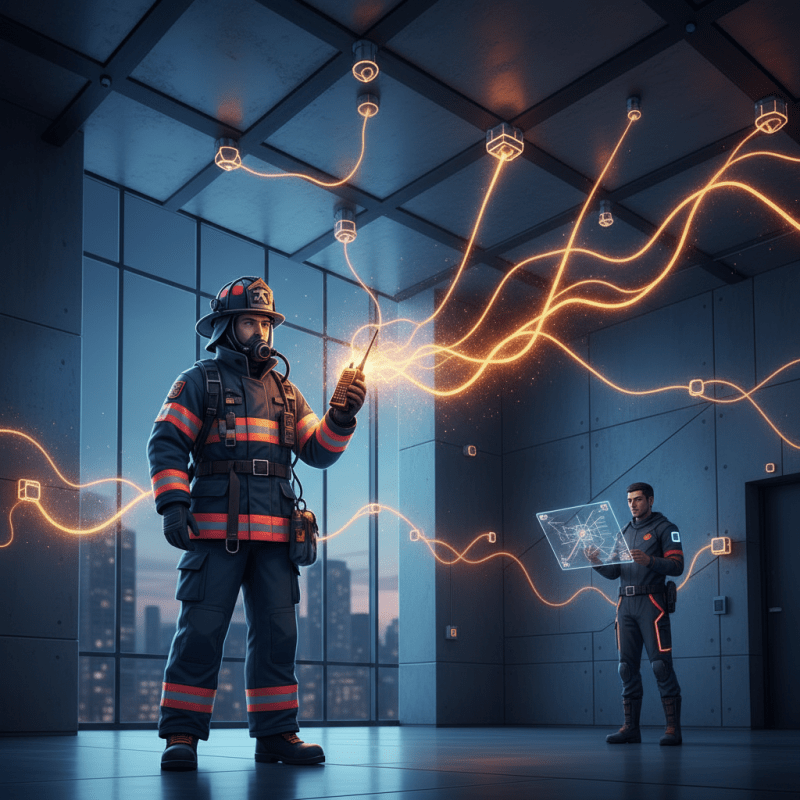
An Emergency Responder Radio Communication System bridges this gap. It acts as a dedicated highway for public safety signals. It picks up the signal from the outside network. Then, it amplifies that signal and distributes it throughout the interior of the building. This ensures that a firefighter on the 30th floor or in a sub-basement can talk clearly to the commander on the street.
Without this system, rescue teams would have to rely on runners to relay messages. This is slow and dangerous. In a medical emergency, a delay of a few minutes can mean the difference between life and death. Therefore, having a functional ERRCS is a fundamental part of any robust emergency preparedness plan.
Understanding Public Safety DAS and BDA Technology
To understand how we solve the coverage problem, we must look at the technology. The core solution is often referred to as a Public Safety DAS. This stands for Distributed Antenna System. It works in tandem with a Bi-Directional Amplifier, or BDA. These two components are the heart and lungs of the system.
The Bi-Directional Amplifier is the powerhouse. It is a device that boosts the signal strength. It works in two directions, hence the name. First, it pulls the signal from the public safety radio tower down into the building. Second, it takes the signals from radios inside the building and boosts them back out to the tower. This two-way street is vital for conversation.
The Distributed Antenna System is the network that delivers this signal. It consists of a series of antennas placed strategically on ceilings or walls throughout the building. These antennas are connected by coaxial cable or fiber optics. You can think of it like a sprinkler system. But instead of water, these ‘sprinklers’ spray radio coverage into every corner of a room.
Designing a Public Safety DAS requires precision. Engineers use advanced software like iBwave to map out the building. They calculate exactly where each antenna must go to eliminate dead zones. If the design is poor, the system might cause interference or fail to cover critical areas like stairwells and elevator lobbies.
Navigating NFPA 1225 and IFC 510 Regulations
Building owners do not just install these systems out of goodwill. They are required by law. The regulations surrounding ERRCS are strict and specific. The two main bodies that set these standards are the National Fire Protection Association (NFPA) and the International Fire Code (IFC). Local jurisdictions adopt these codes and enforce them rigorously.
NFPA 1225 is one of the most important standards. It was formerly known as NFPA 1221. This code outlines the requirements for the installation, maintenance, and testing of emergency communications systems. It specifies everything from the battery backup power to the weatherproofing of the equipment. For example, the system must be able to run on battery power for 12 to 24 hours if the building loses electricity.
IFC Section 510 is another critical regulation. It mandates that all new buildings must be assessed for radio coverage. If the building fails to meet the required signal strength, an ERRCS must be installed. This is often a condition for receiving a Certificate of Occupancy. Without this certificate, a building cannot be opened to the public or tenants.
These codes are not static. They change and evolve as technology improves. What was compliant five years ago might not meet today’s standards. This is why it is crucial to work with experts who stay up-to-date with the latest code changes. Failure to comply can result in hefty fines, delays in building opening, or expensive retrofits down the line.
The Critical Nature of First Responder Communication
We must never lose sight of the human element in this technology. When we talk about signal strength and decibels, we are really talking about safety. For a police officer responding to an active threat, their radio is their lifeline. If they are cornered or injured, they need to call for help immediately. A dead zone in a stairwell could leave them isolated and vulnerable.
Firefighters face unique challenges. They wear heavy gear and breathing apparatuses. They often operate in environments with zero visibility due to smoke. They cannot see hand signals. They rely entirely on voice communication. If their radio fails, they might miss an evacuation order. This puts them in grave danger of building collapse or flashovers.
Paramedics also rely on clear communication. When they are stabilizing a patient in a lobby or an apartment, they often need to consult with doctors at the hospital. They also need to coordinate with the ambulance driver for transport. A dropped signal could delay critical treatment instructions.
An effective ERRCS protects these brave individuals. It gives them the confidence to enter a building knowing they remain connected. It allows incident commanders to manage their teams effectively. When the radio system works, the chaos of an emergency becomes manageable. When it fails, chaos takes over.
Why Expert Installation of Bi-Directional Amplifiers Matters
Installing a BDA and DAS is not a job for a general electrician. It requires specialized knowledge of Radio Frequency (RF) physics. If a system is installed incorrectly, it can do more harm than good. A poorly configured BDA can generate ‘noise.’ This noise can flood the public safety radio network, effectively jamming the radios for the entire neighborhood.
This is a serious offense. The Federal Communications Commission (FCC) regulates the airwaves. If a building’s system causes interference with the city’s radio tower, the FCC can shut the system down. They can also issue severe fines to the building owner. This is why choosing a certified and experienced integrator is non-negotiable.
Expert installation starts with a baseline survey. Technicians walk the building with specialized spectrum analyzers. They measure the existing signal levels to see where the weak spots are. This data informs the design. During installation, they ensure that all cables are fire-rated and properly supported. They verify that the antennas are positioned correctly to maximize coverage without causing interference.
After installation, the system must be commissioned. This involves fine-tuning the amplifier settings. The goal is to provide just enough power to cover the building, but not so much that it bleeds outside. It is a delicate balance that requires training and precision equipment. A professional installer ensures that the system works perfectly from day one.
The Importance of Signal Benchmark Testing and Grid Testing
How do you know if the system is actually working? You cannot just look at it. You have to test it. There are specific testing protocols mandated by fire codes to ensure the system covers the required areas. The most common method is known as grid testing.
In a grid test, the floor plan of the building is divided into equal squares, or grids. Usually, there are 20 or 40 grids per floor, depending on the code. A technician stands in the center of each grid and tests the radio signal. They measure both the audio quality and the signal strength. To pass, the system typically needs to work in 90% to 95% of these grids.
Critical areas are treated differently. These include the fire command center, elevator lobbies, exit stairwells, and standpipe cabinets. In most jurisdictions, these areas must have 100% coverage. If even one of these critical areas fails, the whole system fails the inspection. This strict requirement highlights how vital these specific locations are during an evacuation.
Signal benchmark testing is also done to monitor the health of the system over time. By recording the signal levels when the system is new, we create a baseline. In future years, we can compare new test results to this baseline. If the signal has dropped, it might indicate a failing component or a change in the environment. Regular testing catches these issues before an emergency occurs.
Maintenance and Annual Recertification for ERRCS
An ERRCS is not a ‘set it and forget it’ system. Like any complex electronic system, it degrades over time. Components can fail. Batteries lose their ability to hold a charge. Even renovations in the building, like adding new walls or solar film to windows, can change how the signals behave. Therefore, ongoing maintenance is mandatory.
Fire codes require an annual recertification of the system. This is a comprehensive check-up. Technicians verify that the BDA is free of alarms. They check the battery backup system to ensure it can run for the required duration. They also perform a coverage test to make sure no new dead zones have appeared.
If a system fails its annual inspection, the building owner receives a deficiency notice. This must be corrected immediately. Ignoring maintenance is a liability. If an emergency occurs and the system fails because it was neglected, the legal consequences for the building owner can be devastating.
Lexico provides comprehensive maintenance plans. We track when your inspection is due and handle all the testing. We also monitor the system for any fault codes. Modern BDAs can often send an alert if a problem is detected. This allows us to fix issues proactively, ensuring the system is always ready to save lives.
Retrofitting Existing Buildings for Public Safety Compliance
While new construction projects plan for ERRCS from the start, existing buildings often face challenges. Many older buildings were built before these strict codes existed. However, if a building undergoes a major renovation or change of use, the fire marshal may require the installation of a public safety DAS.
Retrofitting a building can be complex. You have to work around existing ceilings, walls, and tenants. It requires a careful approach to minimize disruption. The design must be flexible enough to adapt to the existing architecture while still meeting the strict coverage requirements.
Sometimes, a building owner might receive a notice from the fire department that their building has been identified as having poor coverage. This can happen even without a renovation. In these cases, the owner is given a timeline to fix the problem. Installing an ERRCS in an occupied building requires a team that is professional, clean, and efficient.
The cost of retrofitting is an investment in the asset. A building that is compliant with modern safety codes is more valuable. It is also more attractive to high-quality tenants who prioritize safety. Furthermore, it protects the owner from the risk of litigation associated with safety failures.
Conclusion: Prioritizing Safety Through Technology
Emergency preparedness is about anticipating the worst and having a plan to deal with it. In the modern world, reliable communication is the foundation of that plan. Emergency Responder Radio Communication Systems provide the certainty that first responders need. They remove the variable of ‘dead zones’ from the equation.
For building owners, an ERRCS is more than a code requirement. It is a moral responsibility. It demonstrates a commitment to the safety of the occupants and the brave men and women who protect them. The technology is complex, but the goal is simple: ensure that when help is called, the message is heard.
From the initial design and benchmark testing to the final installation and annual maintenance, every step matters. There is no room for error when lives are on the line. Navigating the codes of NFPA and IFC can be daunting, but you do not have to do it alone. Partnering with experts ensures that your building is safe, compliant, and ready for any emergency.
Frequently Asked Questions
What triggers the requirement for an ERRCS installation?
The requirement is usually triggered during new construction or major renovations. The fire marshal or local authority having jurisdiction (AHJ) will require a signal survey. If the building fails to meet the minimum signal strength required by the IFC or NFPA codes, an ERRCS must be installed before the Certificate of Occupancy is issued.
Can I use my existing Wi-Fi or cellular DAS for public safety?
Generally, no. Public safety systems operate on specific radio frequencies reserved for first responders. They also have much stricter requirements for redundancy, battery backup, and fireproofing than commercial cellular or Wi-Fi systems. While some infrastructure like fiber might be shared in rare cases, the systems are typically completely separate to ensure reliability.
How often does the BDA battery backup need to be tested?
Under NFPA standards, the backup batteries must be tested annually. This test ensures they can support the system for the full required runtime, which is typically 12 or 24 hours depending on the specific code year and local amendments. The batteries usually need to be replaced every few years as part of routine maintenance.
What happens if my building fails the annual ERRCS inspection?
If your building fails the inspection, you will receive a deficiency notice. You are required to repair the system to bring it back into compliance. This might involve replacing a faulty amplifier, fixing a broken antenna, or replacing old batteries. Failure to fix the system can lead to fines and potential liability issues.
Do all buildings need a Bi-Directional Amplifier?
Not all buildings need one. Small buildings or those close to the radio tower might have sufficient natural signal penetration. The only way to know for sure is to perform a professional signal survey. If the survey shows that signal levels are adequate in all critical areas, a BDA is not required.
At Lexico, we understand that navigating the technical and legal landscape of ERRCS can be overwhelming. Our team of experts is dedicated to making the process seamless for you. Whether you need a signal survey for a new project, a retrofit for an existing building, or annual testing to stay compliant, we are here to help. We ensure your systems are installed correctly and maintained to the highest standards. Do not leave safety to chance. Reach out to us today to discuss your building’s needs and ensure your property is ready for any emergency.
Ensure Your Building's Safety - Contact Lexico Today