
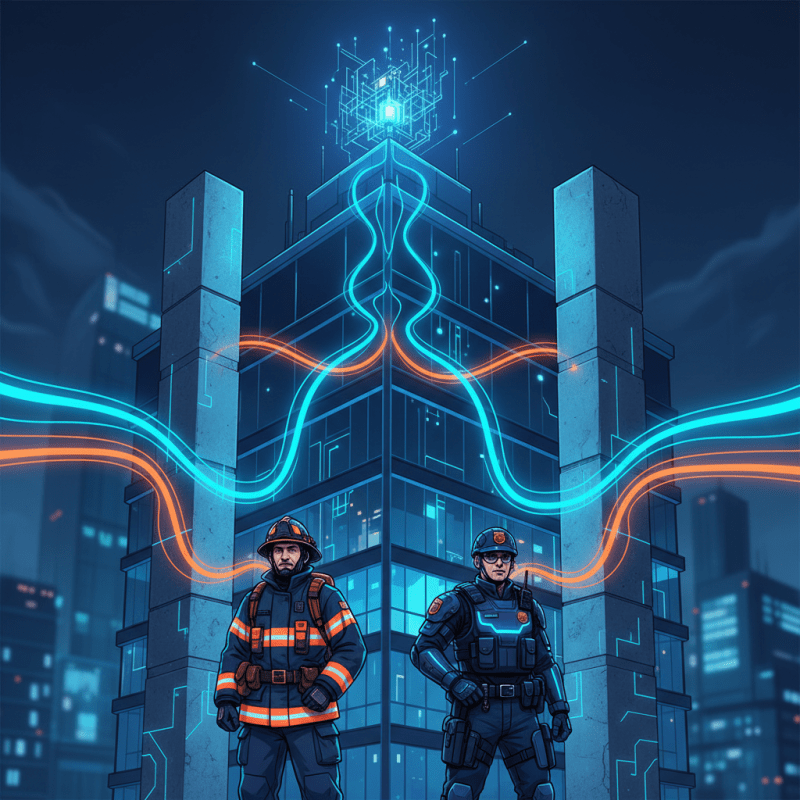
- Navigating Urban Emergencies: The Communication Challenge
- Empowering Emergency Responders with ERCES
- Overcoming Signal Interference for Clear Interoperability
- Building True Urban Resilience Through System Integration
- Meeting Strict Fire Codes and Safety Regulations
- Boosting Response Efficiency and Community Trust
- Frequently Asked Questions About ERCES
Modern cities are expanding at a breathtaking pace, reaching higher into the sky and digging deeper underground. This incredible growth brings vibrant new communities, but it also creates hidden dangers for public safety. When a crisis strikes, clear communication is the most powerful tool a first responder can have. Unfortunately, the complex architecture of our modern world often stands in the way of these critical lifelines.
During urban emergencies, dropped radio calls and static-filled signals can lead to tragic outcomes. Firefighters, police officers, and paramedics rely on two-way radios to coordinate rescues and call for backup. If their radios stop working inside a concrete high-rise, their safety is immediately jeopardized. We must proactively address these communication gaps to build truly safe environments.
This is where advanced technology steps in to bridge the divide and protect our communities. Emergency Responder Communication Enhancement Systems, widely known as ERCES, provide a proven solution to these dangerous signal drops. These specialized networks ensure that public safety personnel remain connected, no matter where they are inside a building. By integrating these systems, we take a massive step forward in overall safety.
In this comprehensive guide, we will explore the massive challenges of in-building radio coverage. We will break down exactly how modern enhancement systems overcome physical barriers and complex environments. You will learn why addressing signal interference is critical for effective multi-agency coordination. Finally, we will discuss how integrating these technologies is a core requirement for true urban resilience.
Navigating Urban Emergencies: The Communication Challenge
Whenever severe urban emergencies occur, time is always the most critical factor for survival. First responders must rush into unpredictable situations, often navigating heavy smoke, power outages, and chaotic crowds. To do their jobs effectively, they must be able to talk to their commanders outside the building. Sadly, many modern structures unintentionally act as massive shields that block these vital radio frequencies.
The Barrier of Modern Building Materials
To understand why radios fail, we must look at how modern buildings are constructed. Developers today prioritize energy efficiency, structural integrity, and noise reduction in their designs. They achieve this by using incredibly dense materials like thick concrete, reinforced steel, and specialized glass. While these materials create strong and eco-friendly structures, they severely disrupt radio frequency waves.
Low-E glass is one of the most common culprits behind poor indoor cellular and radio reception. This energy-efficient glass contains a microscopic layer of metal that reflects heat away from the building. Unfortunately, that same metallic layer also bounces radio signals away from the structure. When combined with concrete and steel rebar, the building essentially becomes a fortress against outside communications.
The Threat of Dead Zones in Critical Areas
Radio frequency signals travel in waves that weaken as they pass through solid physical objects. By the time a signal penetrates several concrete walls, it often loses its strength entirely. This rapid loss of signal strength creates dangerous dead zones where communication is utterly impossible. These dead zones typically occur in the most critical areas of a building.
Stairwells, elevator lobbies, and deep subterranean parking garages are notorious for having zero radio reception. Ironically, these are the exact locations where first responders set up command posts or stage rescue operations. If a firefighter is trapped in a basement dead zone, they cannot call for a rescue team. This lack of connection turns a routine emergency response into a life-threatening scenario.
Why Everyday Cell Phones Are Not Enough
Some might wonder why emergency personnel cannot simply rely on their standard cellular phones during a crisis. Commercial cellular networks are designed for general public use and easily become overwhelmed during major events. When thousands of civilians try to call their families at once, cellular towers quickly reach maximum capacity. This network congestion leaves first responders unable to make critical phone calls when they need them most.
Furthermore, cellular phones do not offer the instant, push-to-talk broadcast capabilities of a two-way land mobile radio. Emergency personnel operate on specialized, dedicated radio frequency bands that are heavily regulated by the government. These specific frequencies require specialized infrastructure to function reliably inside large, complex buildings. Relying on consumer-grade technology is simply not an option for dedicated public safety professionals.
Empowering Emergency Responders with ERCES
To solve the critical issue of dead zones, the public safety industry developed specialized amplification technology. Emergency Responder Communication Enhancement Systems are specifically engineered to bring weak outside radio signals indoors. These systems guarantee that emergency responders can maintain seamless communication throughout an entire facility. They are often the unsung heroes of modern building safety infrastructure.
What Exactly is an ERCES?
An ERCES is a highly sophisticated network of electronic components designed to boost specific radio frequencies. You may also hear these networks referred to as Emergency Responder Radio Communication Systems or ERRCS. Regardless of the exact acronym used, the primary goal remains exactly the same. They act as a dedicated, amplified bridge between the outdoor radio tower and the indoor emergency personnel.
These enhancement systems are not off-the-shelf products that you can simply plug into a wall. They require precise engineering, careful frequency calibration, and professional installation to function correctly. A poorly designed system can actually cause more harm than good by disrupting the citywide radio network. Therefore, building owners must partner with specialized experts to implement these critical safety solutions.
The Role of Bi-Directional Amplifiers
The beating heart of any emergency communication enhancement system is the Bi-Directional Amplifier, commonly called a BDA. The BDA is an advanced electronic device that receives weak signals and significantly boosts their power. It is called bi-directional because it amplifies signals moving in two opposite directions simultaneously. It boosts the signal coming from the dispatch tower, and it boosts the signal coming from the responder.
First, a donor antenna located on the roof of the building catches the signal from the city radio tower. This donor antenna sends the faint signal down a heavy-duty cable directly into the BDA unit. The BDA cleans up the signal, amplifies its strength, and pushes it throughout the building. When a police officer speaks into their radio, the exact reverse process happens instantly.
How a Public Safety DAS Distributes Signals
Once the signal is amplified by the BDA, it needs a way to travel to every corner of the building. This is accomplished through a Public Safety Distributed Antenna System, or DAS for short. A DAS is a carefully mapped network of specialized coaxial cables and small indoor antennas. These antennas are strategically placed in hallways, stairwells, and basements to ensure complete, overlapping coverage.
Designing a Public Safety DAS requires advanced software tools like iBwave to create accurate predictive models. Engineers must calculate signal loss over cable distances and account for the building’s specific architectural features. They strategically place antennas to eliminate every possible dead zone within the structure. The result is a seamless blanket of radio coverage that protects everyone inside.
Overcoming Signal Interference for Clear Interoperability
Bringing radio signals indoors is only half of the battle when designing a functional safety system. The modern urban landscape is absolutely flooded with invisible electronic noise from thousands of different devices. This dense web of competing frequencies can easily cause dangerous signal interference. Managing this interference is a vital part of ensuring clear and reliable emergency communications.
The Invisible Challenge of RF Noise
Every wireless router, cellular tower, and commercial radio station emits radio frequency energy into the air. In a dense city, all of these invisible waves bounce off buildings and overlap with one another. This creates a high noise floor, which is essentially a layer of electronic static. If the noise floor becomes too high, it drowns out the critical public safety radio signals.
When a public safety system is installed incorrectly, it can inadvertently amplify this background noise. This phenomenon creates severe interference that can cripple the communication grid for an entire city block. First responders trying to talk through the interference will only hear broken, robotic audio or pure static. This is why strict regulations exist regarding how these amplification systems are calibrated and installed.
Filtering the Right Public Safety Frequencies
To defeat signal interference, modern Bi-Directional Amplifiers use highly advanced digital filtering technology. These intelligent amplifiers are programmed to only recognize and boost very specific radio frequency bands. They completely ignore commercial cellular signals, Wi-Fi networks, and other irrelevant electronic chatter. This precise filtering process ensures that only the voices of emergency personnel are amplified.
Public safety agencies typically operate on specific bands, such as VHF, UHF, or the 700 and 800 MHz frequencies. A professional installation team will perfectly tune the BDA to match the exact frequencies used by the local jurisdiction. This meticulous tuning prevents the system from causing feedback loops or broadcasting unwanted noise. The end result is crystal-clear audio quality for the people who need it most.
Ensuring Seamless Multi-Agency Coordination
During large-scale events, multiple different agencies must work together to resolve the crisis effectively. Fire departments, police precincts, and emergency medical services all need to coordinate their complex actions. Historically, these different agencies often operated on completely different radio systems that could not communicate. This lack of interoperability caused massive confusion and dangerous delays during joint rescue operations.
Today, modern emergency communication enhancement systems are specifically designed to support multi-agency interoperability. A single, well-designed Public Safety DAS can broadcast the frequencies for the fire department, police, and paramedics simultaneously. This means a police officer in the lobby can relay real-time information to firefighters on the top floor. Breaking down these communication silos is a fundamental requirement for modern crisis management.
Building True Urban Resilience Through System Integration
As our society faces increasingly complex challenges, the concept of urban resilience has become a major priority. Urban resilience is the ability of a city to survive, adapt, and recover from sudden traumatic events. A truly resilient city does not just have strong physical infrastructure; it has unbreakable communication networks. Integrating reliable radio enhancement systems is a foundational pillar of this forward-thinking design philosophy.
Moving Beyond Basic Architecture
For decades, building design primarily focused on aesthetics, occupant comfort, and physical structural integrity. While these elements remain important, developers must now expand their vision to include invisible digital infrastructure. A beautifully designed high-rise is fundamentally flawed if it traps occupants in a digital dead zone during a fire. We must treat internal communication networks with the same importance as internal plumbing or electrical grids.
Architects and urban planners are uniquely positioned to champion these life-saving technologies from day one. By prioritizing radio coverage early, they help create smart cities that actively protect their citizens. This proactive mindset shifts the focus from simply meeting minimum requirements to achieving maximum safety. It represents a profound evolution in how we construct our living and working spaces.
The Importance of Proactive System Design
The most cost-effective and efficient way to implement an enhancement system is during the initial construction phase. When a building is still a skeleton of steel and drywall, routing thick coaxial cables is relatively simple. Engineers can collaborate with architects to hide equipment out of sight without compromising performance. Proactive design ensures that the system is fully operational before the first occupant ever moves in.
Waiting to address radio coverage until after construction is finished often leads to major logistical headaches. Retrofitting a fully finished building requires cutting into completed ceilings, walls, and fire-rated barriers. This process is highly disruptive to current tenants and significantly increases the overall cost of the project. Smart developers understand that budgeting for emergency communications upfront is always the best financial decision.
Retrofitting Older Structures for Modern Safety
While new construction projects can plan ahead, thousands of existing older structures face severe communication deficiencies. Many historic buildings or older concrete warehouses were built long before these modern safety codes existed. Upgrading these older structures is a critical component of achieving widespread urban resilience. Building owners must take the initiative to assess their aging properties for dangerous signal gaps.
Retrofitting an older building requires specialized expertise to minimize disruption while ensuring code compliance. Expert technicians can creatively route cables through existing utility shafts and conceal antennas behind decorative features. While retrofitting requires careful planning, the safety benefits for the building occupants are absolutely invaluable. Upgrading older infrastructure ensures that no community is left vulnerable during an emergency situation.
Meeting Strict Fire Codes and Safety Regulations
Because reliable communication is a matter of life and death, the government heavily regulates these systems. The installation and maintenance of these networks are governed by strict national and international fire codes. Building owners are legally obligated to ensure their properties meet these mandatory safety standards. Failing to comply can result in delayed occupancy permits, heavy fines, or forced building closures.
Understanding NFPA and IFC Standards
The two primary organizations that dictate emergency communication codes are the National Fire Protection Association and the International Code Council. The NFPA publishes NFPA 1225, a comprehensive standard specifically detailing emergency services communications. The International Fire Code, specifically IFC Section 510, outlines the mandatory requirements for in-building radio coverage. Together, these documents form the legal framework for public safety communication infrastructure.
These rigorous codes dictate everything from the thickness of the cables to the battery backup requirements. For example, fire codes mandate that amplification systems must have independent backup power that lasts up to 24 hours. The equipment must also be housed inside specialized, fire-resistant enclosures to survive extreme heat. These strict regulations guarantee that the system will keep working even when the rest of the building fails.
The Necessity of Signal Benchmark Testing
Before a local fire marshal will issue a Certificate of Occupancy, the building must undergo rigorous signal testing. This process, often called benchmark testing or grid testing, proves that the indoor radio coverage is sufficient. A certified technician uses highly calibrated radio scanners to measure the exact signal strength inside the building. This testing removes all guesswork and provides hard data to the local authorities.
During a grid test, the floor plan is digitally divided into a checkerboard of 20 or more uniform squares. The technician walks through every single square to test the radio signal strength and audio clarity. To pass the inspection, at least 95 percent of the general building areas must have reliable coverage. Critical areas, like emergency command centers and fire pump rooms, demand a strict 99 percent coverage pass rate.
Annual Maintenance and Ongoing Testing
Earning a passing grade on the initial signal test is only the beginning of a building owner’s responsibility. Radio frequency environments are constantly changing as new buildings are erected and cell towers are upgraded. A building that passed its inspection flawlessly last year might suddenly develop dead zones today. To combat this shifting environment, fire codes mandate strict annual maintenance and recertification procedures.
Every year, a qualified technician must thoroughly inspect the entire enhancement system to ensure optimal performance. They will check the battery health, inspect the outdoor antennas for weather damage, and run a new grid test. If the local city radio tower has changed its frequencies, the technician will recalibrate the internal amplifiers. This ongoing maintenance guarantees that the system is always ready to perform flawlessly when disaster strikes.
Boosting Response Efficiency and Community Trust
Investing in robust emergency communication systems yields benefits that stretch far beyond simple code compliance. These technologies fundamentally transform how emergency personnel interact with the environments they are trying to protect. When responders have the tools they need, the entire dynamic of crisis management improves dramatically. This ultimately leads to safer neighborhoods and a stronger sense of community trust.
Shaving Seconds Off Response Times
In emergency medicine and fire rescue, survival rates are measured in mere seconds and minutes. When a responder loses radio contact, they have to physically walk back outside to receive new orders. This tedious back-and-forth process wastes precious time that should be spent executing the rescue operation. Reliable indoor communication eliminates these delays completely.
With a functional enhancement system, commanders can direct their teams fluidly and instantly from the ground level. They can warn indoor teams about structural collapses, changing fire paths, or armed suspects in real-time. This seamless flow of information allows rescue teams to move faster, work smarter, and neutralize threats efficiently. Ultimately, saving time directly translates into saving human lives.
Protecting Those Who Protect Us
Emergency responders knowingly walk into dangerous environments every day to protect the public. We owe it to these brave men and women to provide them with the best possible safety infrastructure. Sending a firefighter into a complex, signal-blocking high-rise without reliable radio coverage is an unacceptable risk. Enhancing building communications is a tangible way to protect the lives of our local heroes.
When responders know they can rely on their radios, their confidence and operational effectiveness naturally increase. They can focus entirely on the tactical mission at hand instead of worrying about dead zones. Knowing that backup is always just a quick radio call away reduces stress and prevents preventable tragedies. It is a critical layer of armor for the people who risk everything for our safety.
Fostering Peace of Mind for Building Occupants
For commercial property owners, tenant safety should always be the ultimate priority in facility management. Occupants want to live, work, and shop in environments where they feel genuinely secure and protected. When building owners proactively install emergency communication networks, they send a powerful message to their tenants. They demonstrate a deep, tangible commitment to the well-being of the people inside their property.
This commitment to safety builds immense trust and strengthens the reputation of the property management team. In highly competitive real estate markets, a certified and exceptionally safe building stands out to potential corporate tenants. It provides peace of mind to parents living in high-rise apartments and employees working in sprawling office parks. Everyone benefits when human safety is placed at the very foundation of building design.
Frequently Asked Questions About ERCES
What is the difference between ERCES, ERRCS, and BDA?
These acronyms are closely related and are often used interchangeably in the public safety industry. ERCES (Emergency Responder Communication Enhancement Systems) and ERRCS (Emergency Responder Radio Communication Systems) describe the complete, overall system. A BDA (Bi-Directional Amplifier) is simply the specific piece of hardware within that system that boosts the signal. Together, the BDA and the distributed antennas make up the complete enhancement network.
Does my building automatically need an emergency communication system?
Not every single building requires a dedicated radio amplification system. The requirement depends entirely on the building’s size, its construction materials, and the existing radio signal strength inside. To determine if your building needs one, you must hire a certified professional to conduct a signal benchmark test. If the internal signal fails to meet the local fire code requirements, a system must be installed.
What happens during a signal benchmark test?
During a benchmark test, a specialized technician measures the radio frequency strength across your entire floor plan. They divide the building into a grid and record the Deliverable Audio Quality (DAQ) in every section. A DAQ score measures how clearly a voice can be understood over the radio despite background static. If too many grid squares fall below the passing DAQ threshold, the building fails the inspection.
Can a regular cellular repeater work for public safety?
No, you can never use a standard commercial cellular repeater for public safety communications. Cellular systems and public safety radio networks operate on entirely different frequency bands and technologies. Furthermore, consumer cellular repeaters do not meet the strict fireproofing, backup power, or waterproofing standards mandated by law. You must use specialized, code-compliant equipment specifically manufactured for emergency responder networks.
How often should these systems be inspected?
Fire codes universally mandate that emergency communication systems undergo a comprehensive inspection at least once a year. During this annual check, professionals test the battery backups, inspect the cabling, and verify the signal strength. Regular maintenance is crucial because the external radio environment in a city changes constantly. Staying current with annual inspections keeps your building legally compliant and, more importantly, perfectly safe.
Integrating vital public safety technology into our buildings is not just a regulatory hurdle; it is a moral obligation. As cities continue to grow, the complexities of urban emergency response will only multiply. By prioritizing reliable radio communication infrastructure, we empower our first responders to act swiftly and decisively. It is time for developers, architects, and property managers to embrace these life-saving technologies to build a resilient future.
If you are ready to secure your property and protect your community, expert guidance is absolutely essential. Lexico specializes in the comprehensive design, meticulous installation, and ongoing maintenance of code-compliant public safety communication systems. Our dedicated team of experts will navigate the complex fire codes and deliver a flawless, reliable solution tailored to your building. Reach out to our team today to request a thorough signal benchmark test and ensure your facility is prepared for any emergency.
Ensure Your Building's Safety - Contact Lexico Today